
Gendun Tsomo's family in Jiada village, Naxi ethnic township, Mangkam county, southwest China's Xizang Autonomous Region, manages 48 salt plots.
"Our family's salt is still sun-dried using the same methods from the Tang Dynasty (618-907)," she said.
Salt-making in Mangkam dates back more than 1,300 years. Gendun Tsomo's village is where salt production first began in Mangkam. Naxi ethnic township has a total of 48 salt wells.
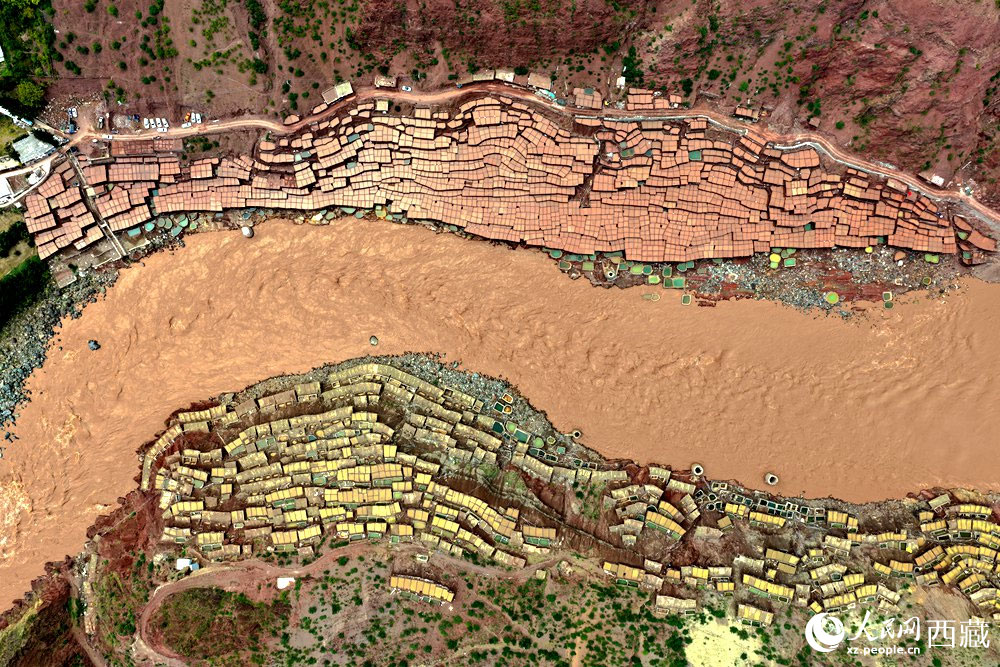
Photo shows ancient salt pans in Mangkam county, southwest China's Xizang Autonomous Region. (People's Daily Online/Luo Yuxin)
Originally, salt was dried on level ground. Later, mudslides and floodwaters buried the pans, so villagers moved them onto steep slopes and built elevated wooden platforms. The method itself never changed — cypress posts support the platforms, vegetation is laid across the top and covered with a layer of local red or white soil, and once the brine is poured in, the wind and sun do the rest.
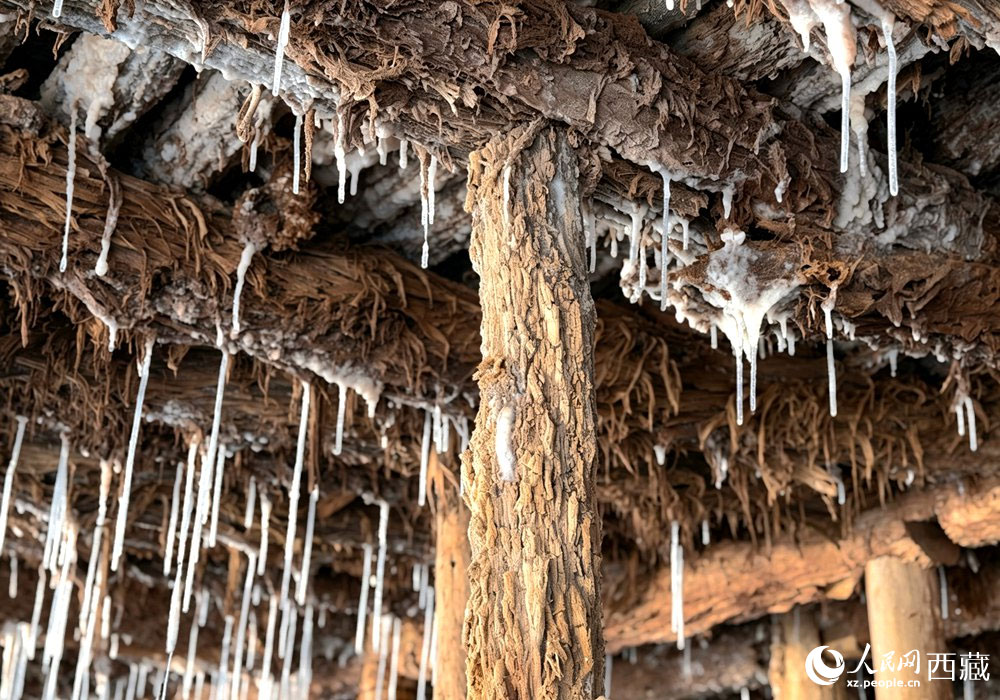
Photo shows natural salt crystals formed beneath the wooden structures of the ancient salt plots in Mangkam county, southwest China's Xizang Autonomous Region. (People's Daily Online/Luo Yuxin)
The technique behind the salt — sun-drying brine drawn from ancient wells — was added to China's national intangible cultural heritage list in 2008. In 2013, the salt pans themselves were designated a Major Historical and Cultural Site Protected at the National Level and added to China's tentative list for UNESCO World Heritage status.
Gendun Tsomo, 33, remembers following her mother to the salt wells as a child, carrying brine along narrow paths to the storage ponds and making dozens of trips a day. In winter, the salt water cracked her hands and feet, while the heavy loads built thick calluses on her shoulders. A child growing up here would wear through several buckets.
Later, diesel-powered pumps were introduced, but they were too heavy for women to move — only half the problem solved. Gasoline-powered pumps followed in 2005, and electric pumps replaced them after the village was connected to the grid in 2006. Those remain in use today.
Brine is drawn differently now, but the craft of making salt has not changed. Pouring the brine, sun-drying it and harvesting the crystals are all still done by hand, as they always have been.
The salt-making season runs from November to June, with March to May being the busiest period. In good weather, salt can be harvested every three to five days. During prolonged rainy spells, however, workers may have to wait 10 to 20 days. Heavy rain can dilute the brine, forcing them to start several days of work all over again.
The harvest depends on the weather, and so does the income. Salt-making is hard, slow work with modest returns — and fewer young people are willing to spend their winters hauling brine.
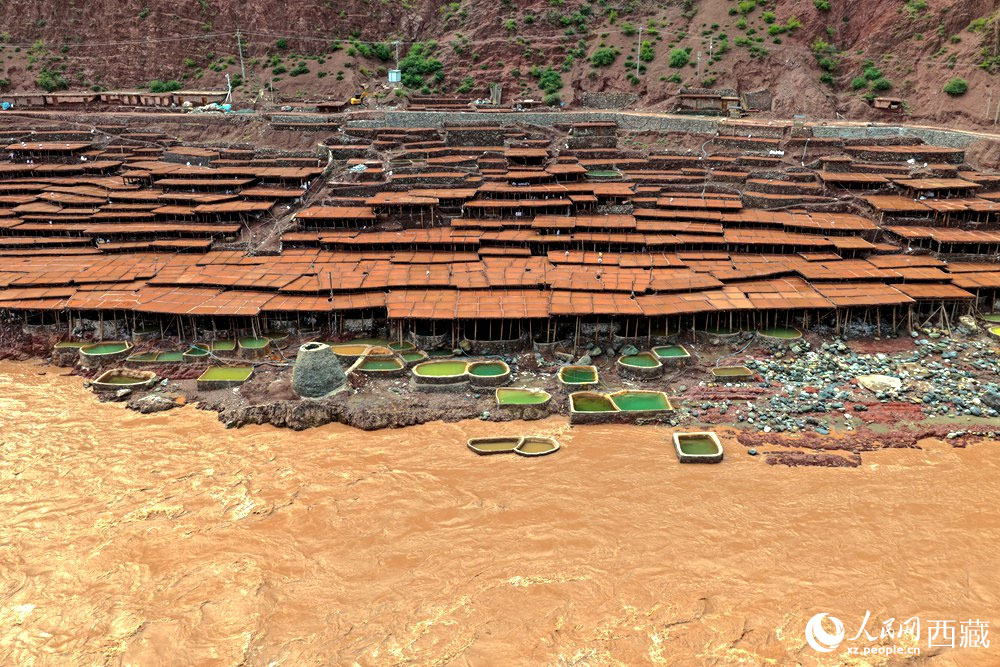
Photo shows ancient salt pans in Mangkam county, southwest China's Xizang Autonomous Region. (People's Daily Online/Luo Yuxin)
To preserve the salt pans and their original landscape, the local government allocated 1.21 million yuan (about $180,660) in work-relief funds for repairs — money that paid local workers to carry out the work. Drawing on that heritage and the region's tourism, the local government is now pushing for the salt pans to be rated a 5A-level scenic area, the top tier in China's national classification. In 2024, Mangkam drew just over 1 million tourist visits and generated 140 million yuan in tourism revenue.