
For villagers in the Nedong district of Lhokha in the Xizang autonomous region who are currently busy harvesting autumn highland barley, the integration of agricultural technology has led to standardized cultivation and improved seed varieties.
Highland barley, or qingke, is the primary grain crop in Xizang and is deeply embedded in local culture, serving as the main ingredient for traditional staples like tsampa and barley wine.
Six years ago, Nedong district was designated as one of Xizang's key demonstration zones for the barley industry technology system, pioneering modernized farming practices.
In Mondrongang village, 47-year-old farmer Dawa Chozom sits chatting leisurely with her neighbors, waiting for machinery coordinated by the local village committee to harvest the crops on her 1.33 hectares of land.
"Manual harvesting used to take about half a month, but with machines, it takes just seven to eight days," she said.
Under a village service program, farmers pay a subsidized rate of 30 yuan ($4.45) per 0.66 hectare for a comprehensive service that includes machinery, operators, sowing and harvesting.
Phuntsok Dhondup, an official in the Mondrongang community, outlined the comprehensive support provided to villagers. "We introduce high-yielding seeds directly to the fields and offer government-subsidized fertilizers at below-market prices," he said.
"We also arrange expert-led training sessions so that villagers can learn to operate advanced equipment like drones and balers themselves."
Lhokha's government has deployed multidisciplinary technical service groups to provide over 120 days of field support and conduct more than 310 training sessions.
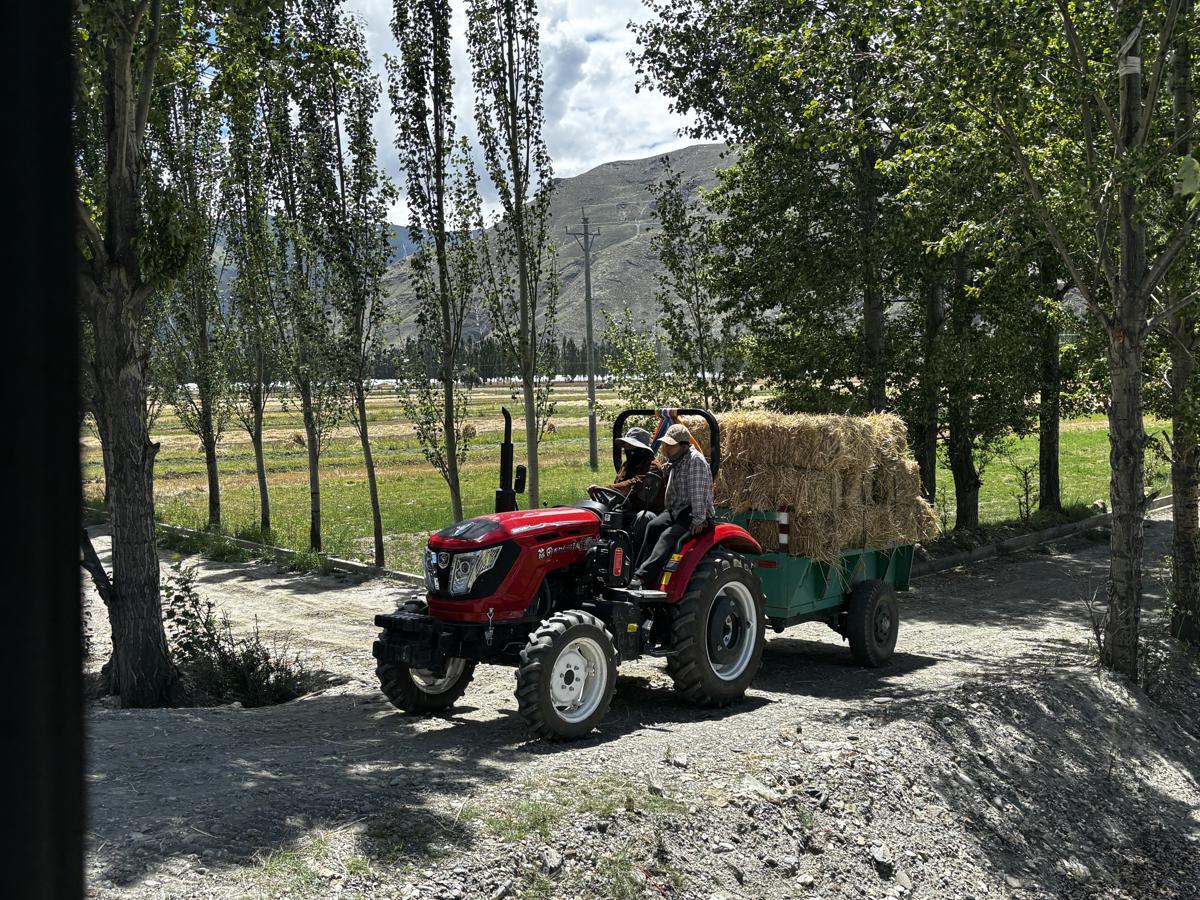
Agricultural technology has been increasingly adopted in Nedong district to improve production and grain output. [Photo by Palden Nyima/chinadaily.com.cn]
Over the past two years, precision sowing and targeted fertilization have increased yields in the Nedong demonstration area by 6.8 percent, with new crop varieties increasing average farmer revenue by 258 yuan per 0.66 hectare in Lhokha.
Nedong's success reflects a broader technological shift across Xizang. According to data from the regional government, the region's grain mechanization rate reached 73.4 percent in 2025 and is projected to exceed 80 percent by 2030.
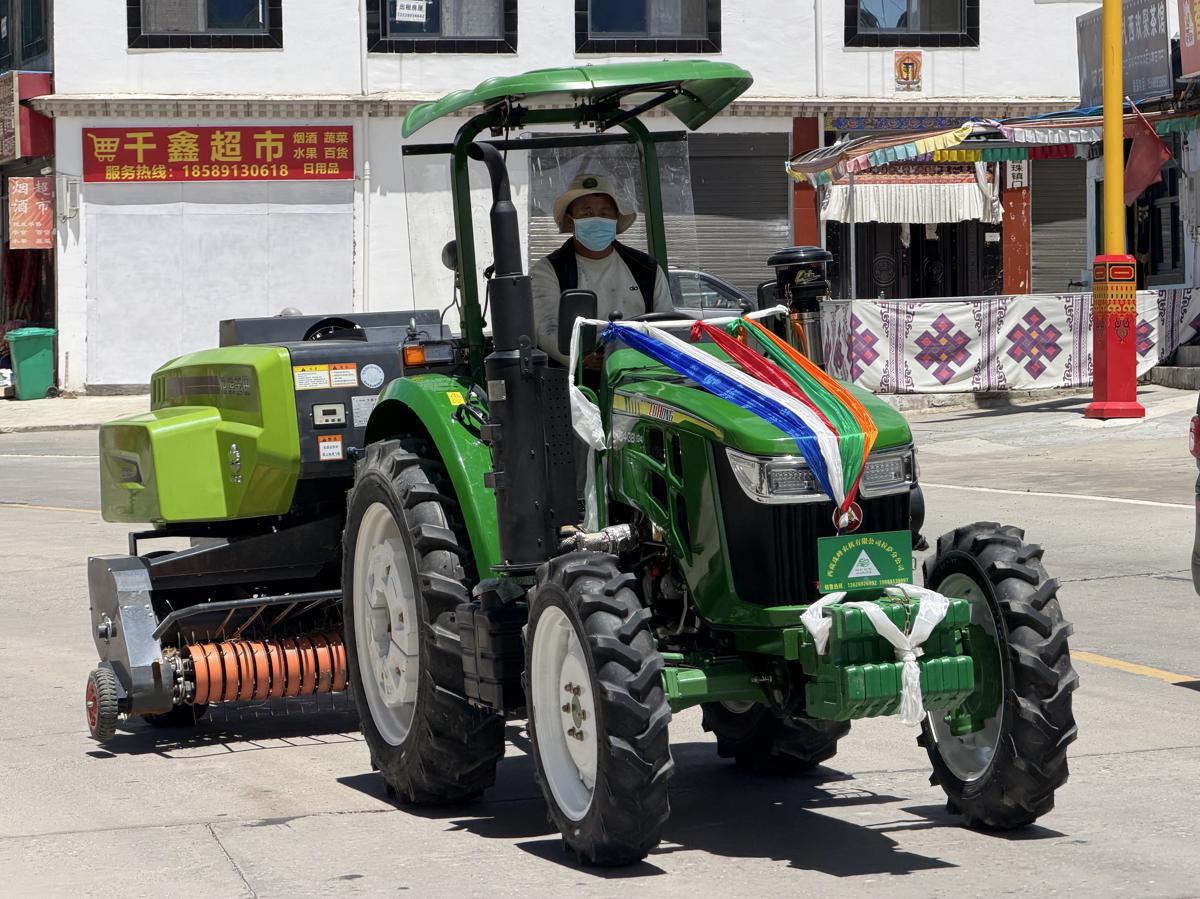
Agricultural technology has been increasingly adopted in Nedong district to improve production and grain output. [Photo by Palden Nyima/chinadaily.com.cn]
"Developing superior seeds addresses 'what to plant', while standardized cultivation technology solves 'how to grow well'," said Cai Shengguan, a professor and associate dean of the Department of Agronomy at Zhejiang University and scientist of the China Agriculture Research System.
Cai noted that only when new varieties are planted, supporting techniques adopted and tangible income gained can scientific innovation truly be transformed into long-term food safety on the plateau.
Li Jiexia and Guo Yuhe contributed to this story.