
Jampa Drolkar was born into a family of weavers in Chanang county, Shannan, southwest China's Xizang Autonomous Region. This year, the 29-year-old formally took over her family's weaving cooperative, from which more than 80 households in her village now derive their livelihoods.
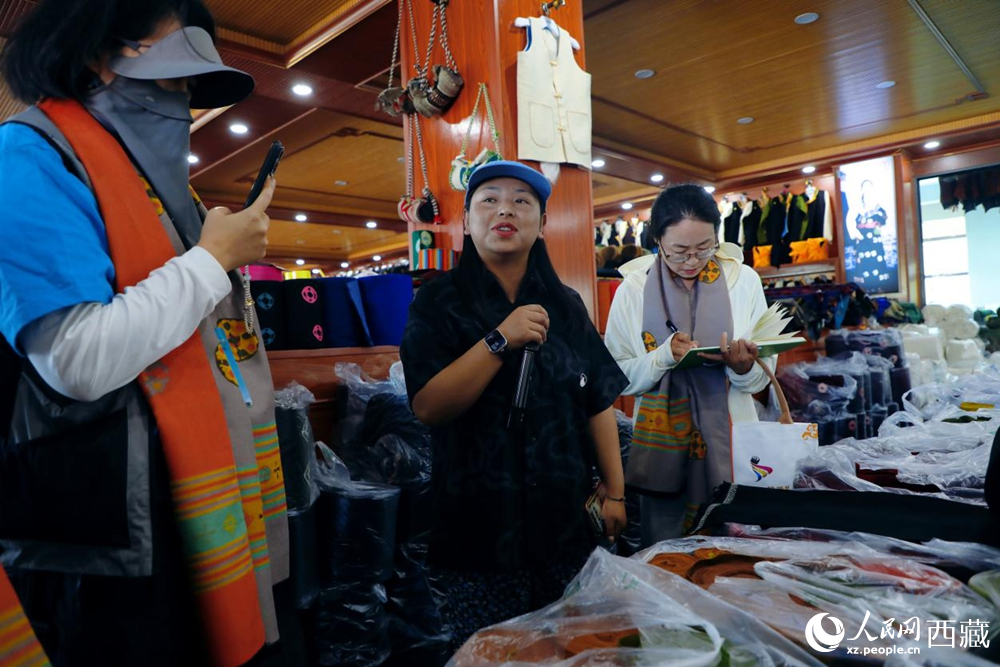
Jampa Drolkar (second from right) introduces products to reporters in Chanang county, Shannan, southwest China's Xizang Autonomous Region. (People's Daily Online/Tsering Norbu)
The old workshop her father had run for decades produces pulu — a Tibetan woolen fabric — that was traditionally thick, stiff and dark in color, and mainly used as a raw material for traditional Tibetan robes.
Hand-woven pulu, she explained, tends to be heavy and coarse, limiting its use mostly to traditional garments worn only on major holidays. To create products that match current market demand, she decided to bring in machinery to upgrade production. Her father supported the idea, and the two began experimenting together.
However, some villagers resisted the move, fearing it would replace their work. Chanang's hand-woven pulu, passed down for over 1,000 years, was recognized as a national geographical indication product in 2012, and many locals see the pulu weaving craft as central to their livelihoods.
Rather than argue, she expanded the workshop, keeping space for veteran artisans while adding new machines, and trained villagers to use them.
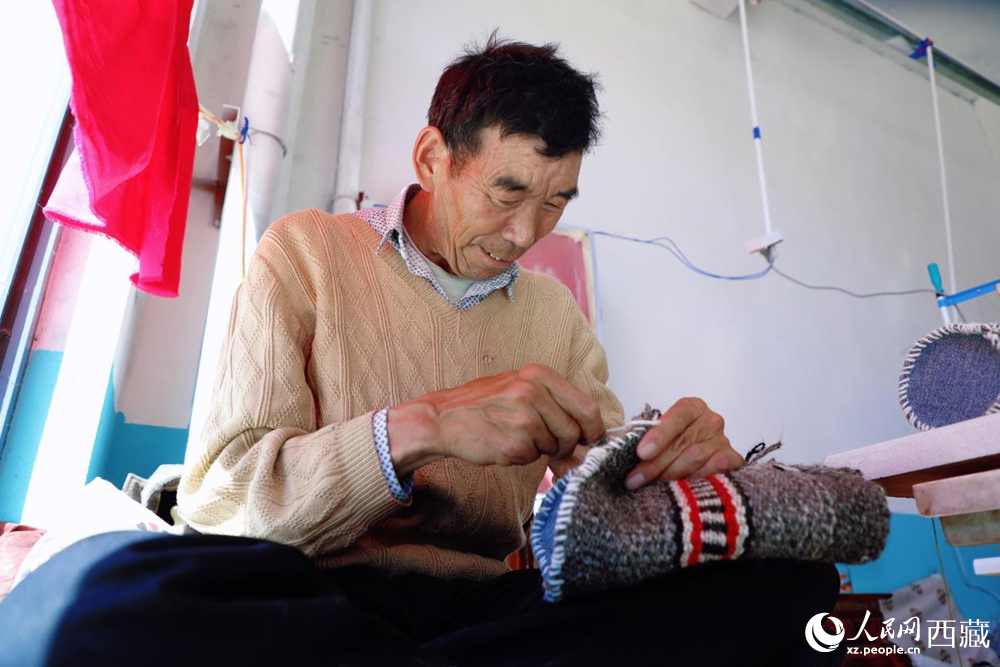
A worker weaves Tibetan felt by hand in Chanang county, Shannan, southwest China's Xizang Autonomous Region. (People's Daily Online/Tsering Norbu)
A second dispute arose when Jampa Drolkar and her father decided to move dyeing outside the workshop and switch from traditional methods to tie-dyeing techniques, a change many opposed at first, fearing the loss of a key source of income. Over time, however, villagers came to appreciate its advantages, from finer patterns and steadier colors to no more coughing over dye vats. Opposition gradually faded.
The real turning point came through market demand. Machine-woven pulu was thinner, softer and more colorful, allowing the cooperative to expand from traditional robes into scarves, bags and cultural products. Bangdian, a bright, elegant traditional apron and an essential part of Tibetan women's attire, has even become popular with tourists as a decorative tablecloth.
The cooperative has also partnered with companies across China to supply photography studios with authentic Tibetan garments for tourists. This has generated income while helping more people understand genuine Tibetan culture.
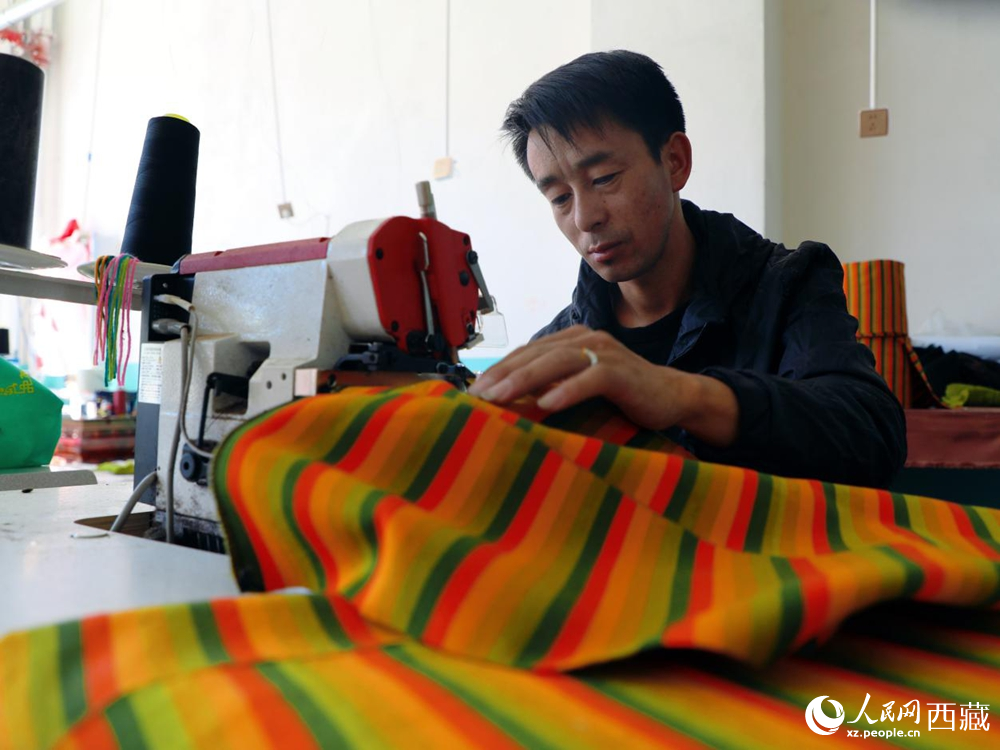
A worker uses a machine to weave pulu, a Tibetan woolen fabric, in Chanang county, Shannan, southwest China's Xizang Autonomous Region. (People's Daily Online/Tsering Norbu)
Today, veteran artisans still operate traditional looms by foot pedal alongside younger workers running machines. Tenzin Chophel, who has worked at the cooperative for a decade, said his monthly income now exceeds 8,000 yuan ($1,180).
Chanang county now has more than 4,000 people working in pulu weaving and sales, with the industry serving as a key pillar of the local economy and a growing draw for tourism.
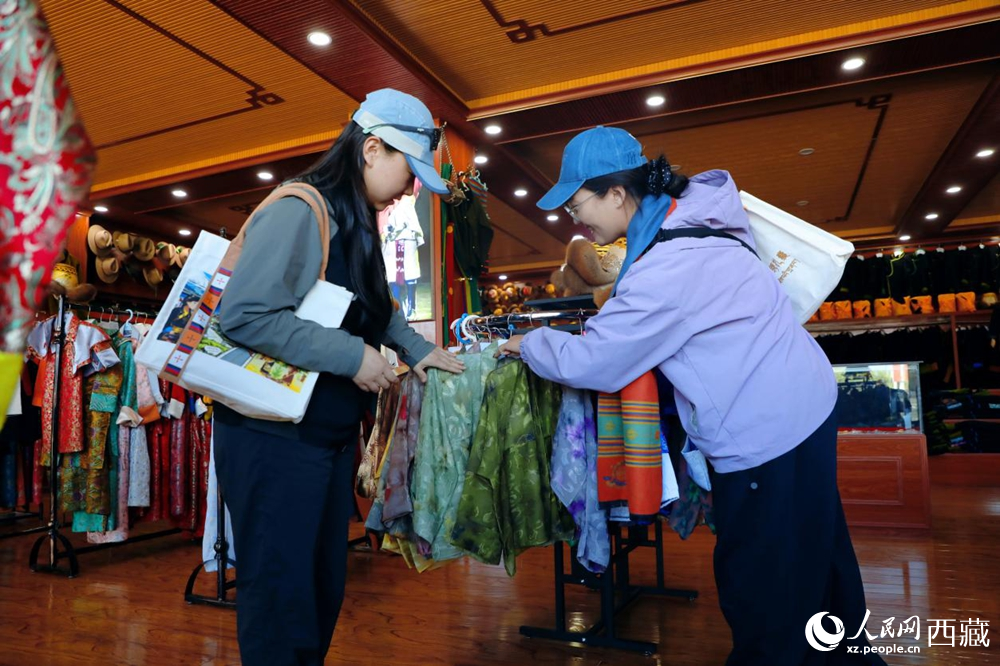
A customer selects pulu products in Chanang county, Shannan, southwest China's Xizang Autonomous Region. (People's Daily Online/Tsering Norbu)
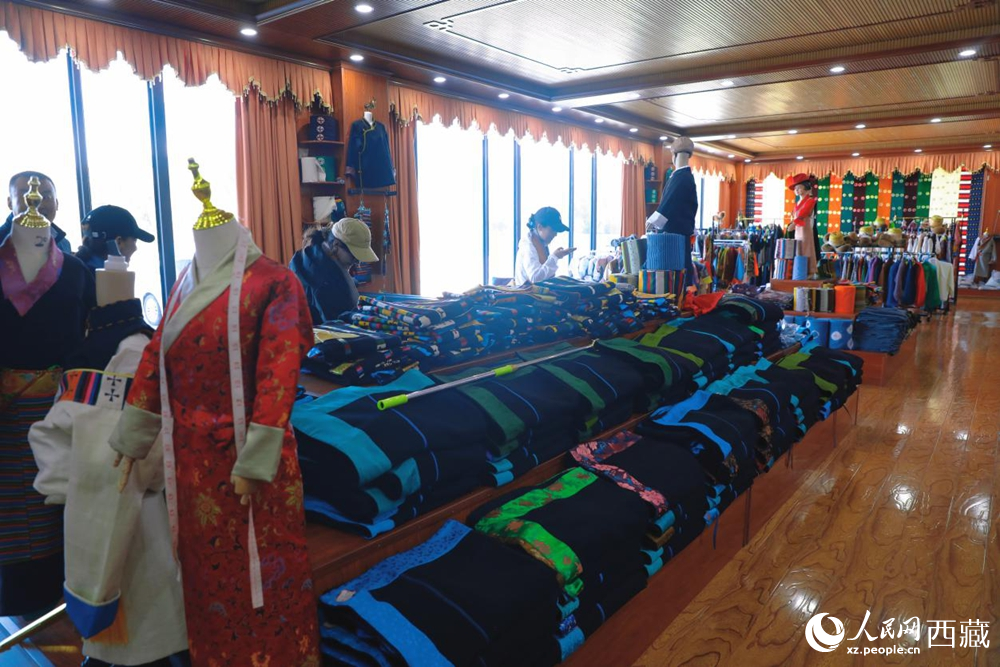
Photo shows a wide array of pulu products on sale in a showroom in Chanang county, Shannan, southwest China's Xizang Autonomous Region. (People's Daily Online/Tsering Norbu)