
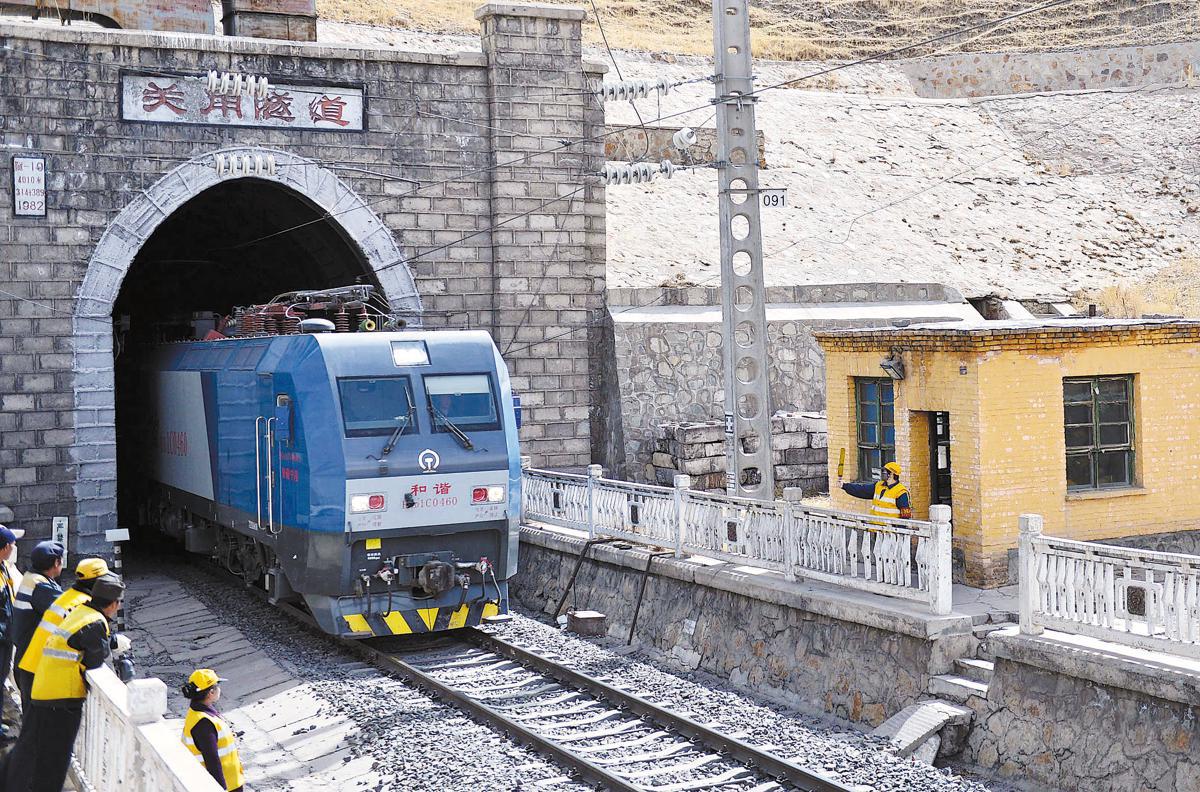
A train exits the Old Guanjiao Tunnel on the Qinghai-Xizang Railway in West China's Qinghai province, in April 2013. WANG BO/XINHUA
At the Nagchu railway workshop, situated 4,500 meters above sea level, workers once gave a simple flight of stairs a grim nickname: the "deadly 23 steps".
The staircase is short. On the plains, one would scale it without a second thought. But in the thin air of the Northern Xizang Plateau, climbing it after hours of outdoor labor leaves railway signal mechanics gasping for breath, their lips turning a distinct hypoxic blue and their limbs heavy.
"Even walking could leave us short of breath," maintenance worker Zhang Huxiong recalled. "But we still had to carry tools and get the job done."
For Zhang, the nickname captures something outsiders often miss about the Qinghai-Xizang Railway. The difficulty of keeping trains running on the world's highest rail line is not always found in dramatic moments. More often it is found in the body's reaction to an ordinary staircase.
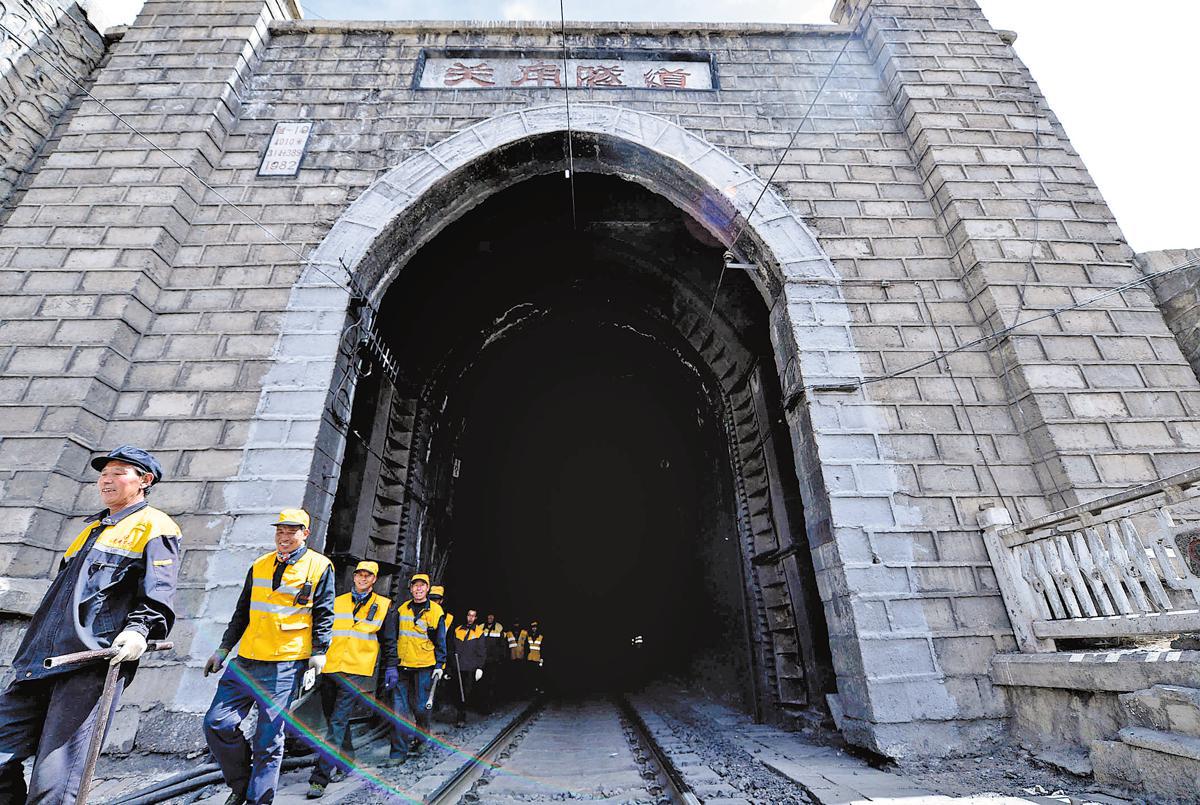
Maintenance workers walk out of the Old Guanjiao Tunnel in April 2013. WANG BO/XINHUA
Much of the railway runs through areas above 4,000 meters, where the effective oxygen intake per breath drops to roughly 60 percent of sea-level values. Sub-zero temperatures, gale-force winds and vast geographic isolation compound the physical toll of routine maintenance.
For the older generation of railway workers, this brutal environment was once managed almost entirely through sheer physical endurance.
Hundreds of kilometers north of Nagchu, at the gateway to the plateau, Gu Haidong has spent over three decades maintaining tracks near the Guanjiao Mountains in Qinghai province. When he arrived in 1994, the infrastructure was primitive. Trains labored slowly through the old, exposed Guanjiao pass, and maintenance meant brutal shifts in unpredictable alpine weather, followed by weeks cut off from civilization.
In the busiest periods, Gu said, he could be away from his family for nearly 100 days straight. A trip home to Xining once took most of a day.
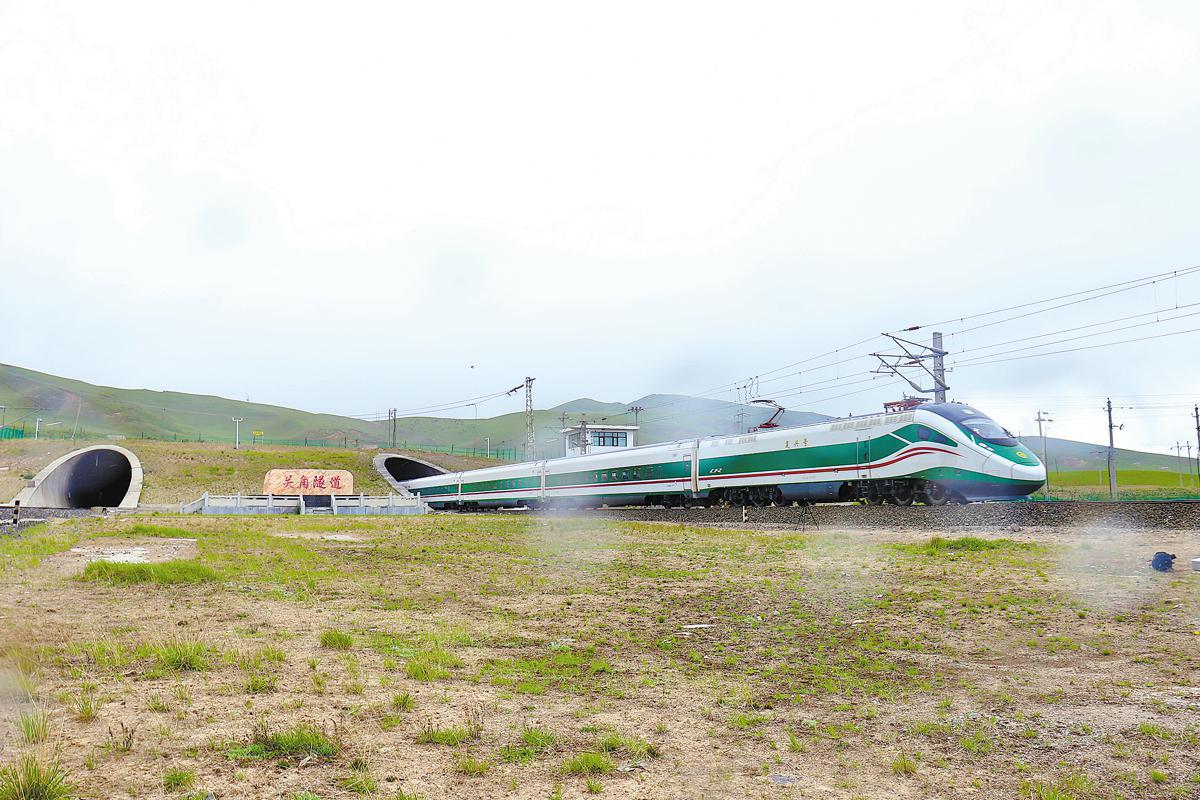
A bullet train makes its way out of the New Guanjiao Tunnel in Qinghai province. CHINA DAILY
The opening of the New Guanjiao Tunnel in 2014 changed both the railway and the lives of those who maintained it. As the world's longest dual-line high-altitude railway tunnel, the 32.69-kilometer structure cut transit times through the treacherous mountain pass from two hours to just 20 minutes. For Gu, the journey home shrank to a manageable three and a half hours.
The influx of modern engineering did not eliminate the inherent hardships of the plateau — rather, it systematically changed how those hardships are managed.
According to China State Railway Group, at high-altitude signal and maintenance sites, workers today have better oxygen supplies, water systems, sewage treatment, internet access and recreation facilities. More importantly, technology has reduced the need for workers to spend long periods outdoors in dangerous conditions.
Zhang said upgraded signaling systems have also changed daily work. Devices that once required more on-site checks can now be monitored from indoors, and track switches can be controlled remotely.
For workers on the plateau, that means fewer unnecessary trips into the wind and thin air. For train operations, it adds another layer of safety.
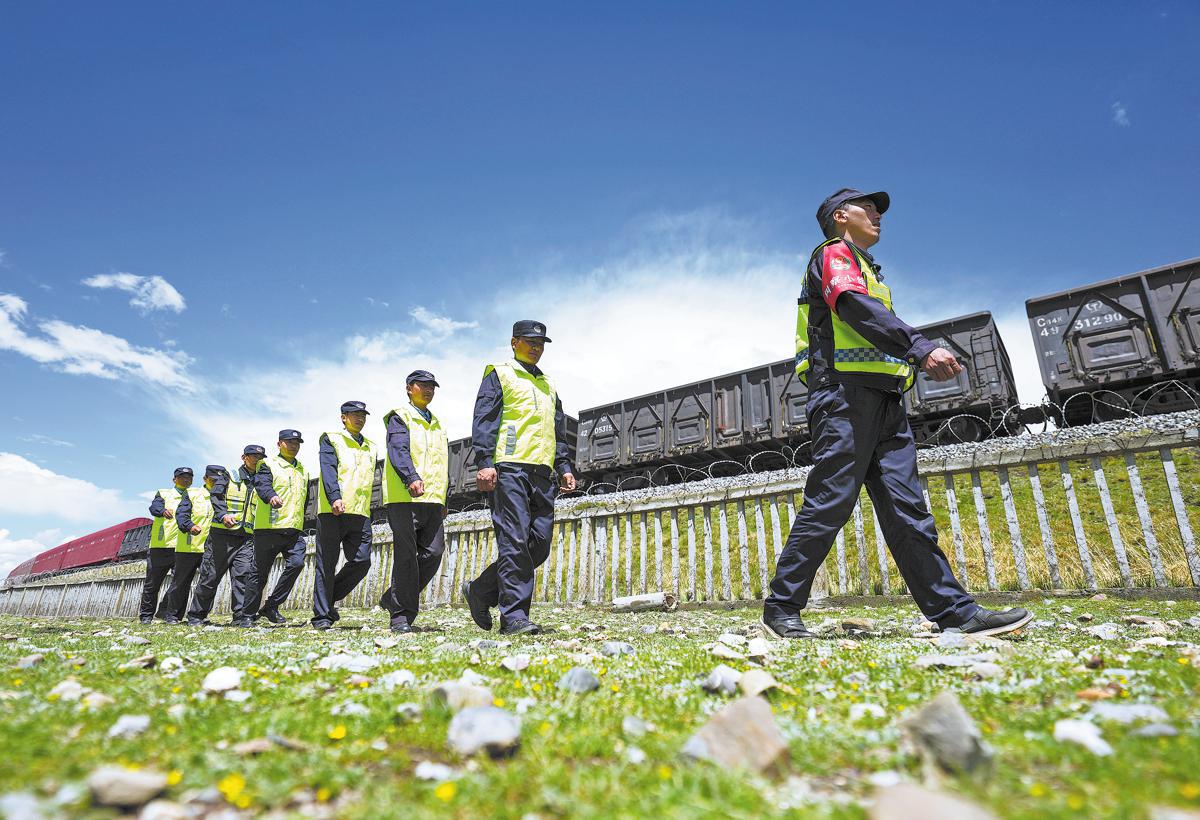
A team of railway workers patrol along the Qinghai-Xizang Railway in Nagchu, Xizang autonomous region, on June 18. JIGME DORJI/XINHUA
Today, a younger generation is stepping into this high-tech environment.
Hao Bin, a young railway worker who relocated to the plateau from the desert plains of Baotou in the Inner Mongolia autonomous region, now handles track inspections at the modernized Guanjiao Tunnel sector.
In the past, he said, senior workers had to carry tools, squat beside the rails and check the track by hand — measuring whether the two rails were properly aligned and whether the track conditions would allow trains to pass smoothly, without obvious shaking. If they found a problem, maintenance work had to follow.
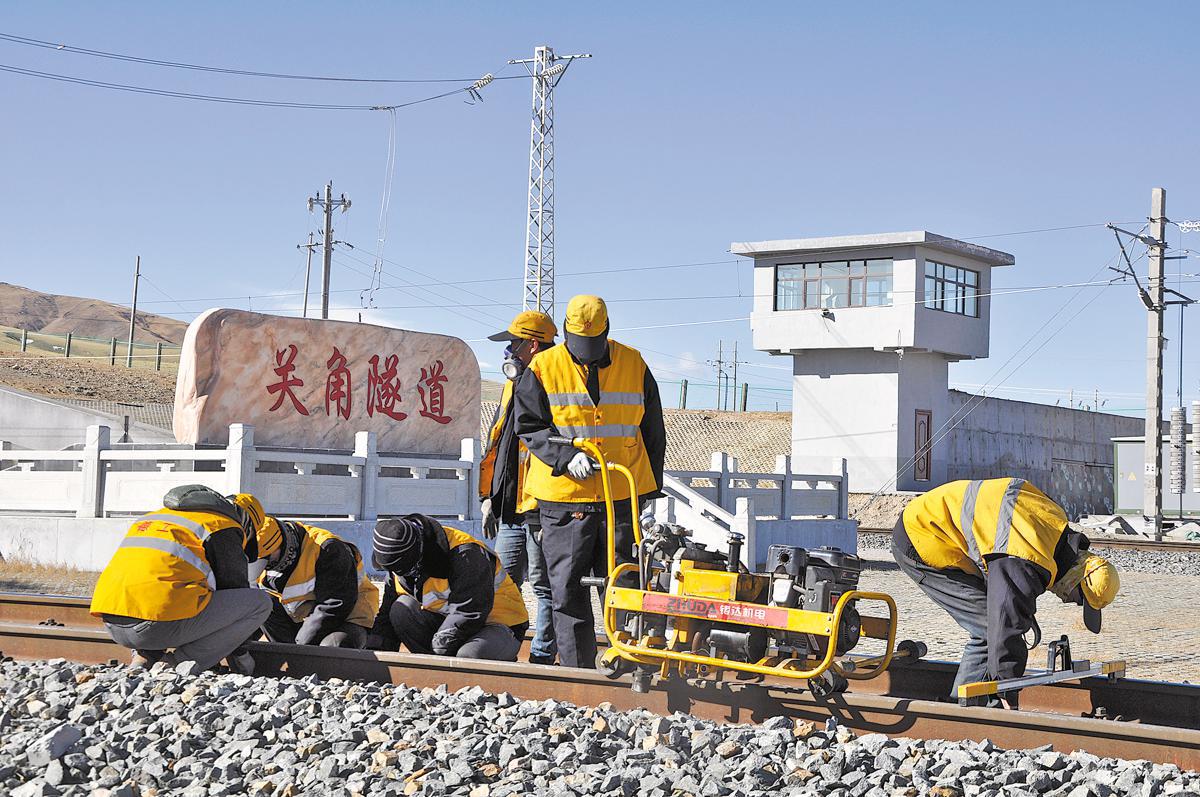
Maintenance workers use an automatic trolley to examine the status of the track. CHINA DAILY
Today, Hao pushes an inspection trolley along the rails. As the trolley moves, instruments collect data automatically, measuring the condition of the track and sending results to technicians. The system helps identify where maintenance may be needed before a problem becomes more serious.
Where early operations relied on manual labor and hard-won experience, the modern line is insulated by automated data arrays, remote monitoring and predictive smart alerts.
But when a warning appears, the work ultimately returns to human hands. Someone has to put on a thick coat, carry equipment and step back into the wind and thin air.
Back at the Nagchu workshop, the "deadly 23 steps" remain exactly where they were. They are short enough to look entirely ordinary — and high enough to remind anyone who climbs them precisely where they are standing.