
.jpeg)
Embroidery thangka works by Pasang Dekyi and her team on display at the Embroidery Thangka Inheritance and Training Base in Lhasa, Xizang autonomous region. CHINA DAILY
Born into a family of artisans, Pasang Dekyi, a 20-something inheritor of Xizang embroidery, has dedicated herself to sustaining this 600-year-old intangible cultural heritage by weaving tradition into contemporary life.
"Xizang embroidery is not something to hang on a wall and forget. It carries warmth and stories in every stitch. When people truly see it, it can become part of their everyday lives," Pasang Dekyi said in an exclusive interview with China Daily.
A distinctive art form of the people of the Xizang autonomous region, the applique embroidery combines folk handicrafts with painting techniques. Unlike traditional thangka paintings, it uses silk, brocade and other fabrics cut and pieced together, then layered to create a three-dimensional effect, like a relief on cloth.
A basic applique thangka takes three to five months to complete. It involves more than 10 precise steps, from preparing the base and selecting materials to matching colors, cutting shapes, stitching, layering and final ironing.
"For me, beyond the facial details, the hardest part is choosing the right materials and integrating them seamlessly," Pasang Dekyi explains.
"Every Xizang embroidery piece has a soul. The essence lies in cutting, stacking, and pasting," Pasang Dekyi emphasizes, adding that core craftsmanship must never be compromised, even for innovation.
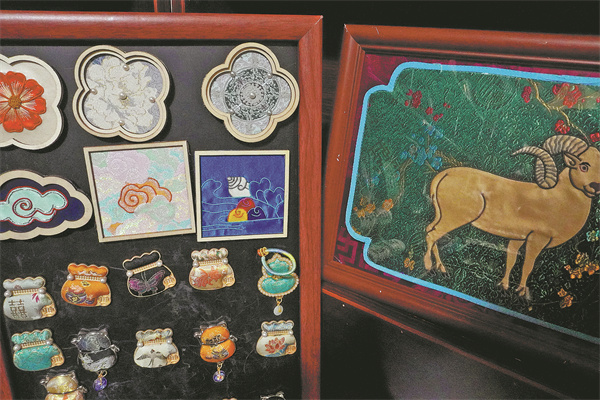
Cultural and creative embroidery products, including fridge magnets, and desktop ornaments, created by Pasang Dekyi's team. CHINA DAILY
When it comes to patterns, the traditional Eight Auspicious Symbols — such as the parasol, golden fish and treasure vase — are commonly featured alongside floral motifs, lion designs and dragon patterns.
Each element conveys layered meanings, from blessings and prosperity to protection and harmony, she says.
Pasang Dekyi's connection to the craft began long before she consciously chose it. Raised in a family deeply engaged in handicrafts, she absorbed its rhythms naturally.
"I didn't realize I was learning it at first. Later, I understood it had already become part of how I live, not just a career decision," she recalls.
While studying at university, Pasang Dekyi formally joined the family workshop. It was then that she decided to devote her life to Xizang embroidery.
"I chose this path over civil service exams or the internet industry because I value the calm and focus it brings. Each stitch keeps me grounded," she says.
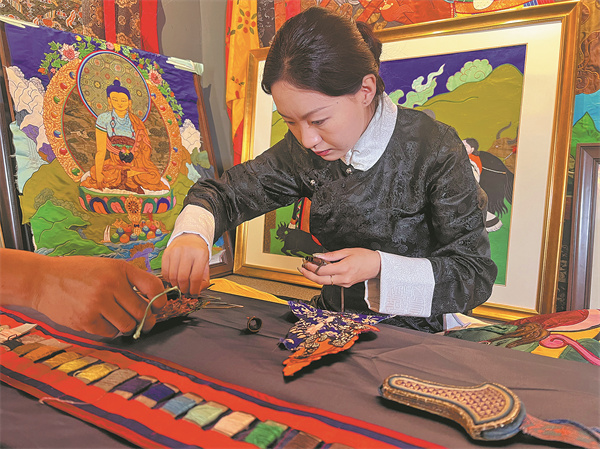
Pasang Dekyi works on an embroidery piece in her workshop in Lhasa, capital of the Xizang autonomous region. CHINA DAILY
Her father, Norbu, a regional-level inheritor of Xizang embroidery, founded the Lhasa Tsemonling Ethnic Handicraft Inheritance Center in the regional capital, Lhasa, in 2006.
Over nearly four decades, Norbu has trained over 40 craftsmen, including people with disabilities and orphans. The center offers free training and accommodation.
"His lifelong lesson to me is perseverance. He does everything with unwavering determination, and I try to do the same," Pasang Dekyi says.
Building on that foundation, she has begun exploring ways to make Xizang embroidery more approachable. Her creations range from traditional works to contemporary items such as brooches, bracelets and fridge magnets. Some designs even incorporate familiar pop culture imagery, including Mickey Mouse.
By introducing recognizable elements, she hopes to spark curiosity among younger audiences and people from different cultural backgrounds.
"Many traditional thangka subjects feel distant or solemn to newcomers," she says. "Using familiar characters like Mickey opens a door and creates a bridge. It invites people in and encourages them to learn more."
Her studies in cities such as Suzhou, Jiangsu province, and Beijing further expanded her perspective. There, she experimented with adapting applique embroidery into cultural products and interactive workshops, presenting the craft in ways that feel lighter, more engaging and easier to access.
"This is not about breaking tradition," she says. "It's about continuing it in a language people today can understand."
Looking ahead, Pasang Dekyi envisions two parallel directions. One focuses on high-end custom pieces, using exquisite craftsmanship on formal dresses to showcase the art's grandeur. The other emphasizes minimalist designs for everyday wear, featuring subtle details that resonate with younger consumers.
She also hopes to take Xizang embroidery to international fashion weeks and art exhibitions, letting the world know that Xizang's beauty lies not only in its landscapes but also in its exquisite craftsmanship.
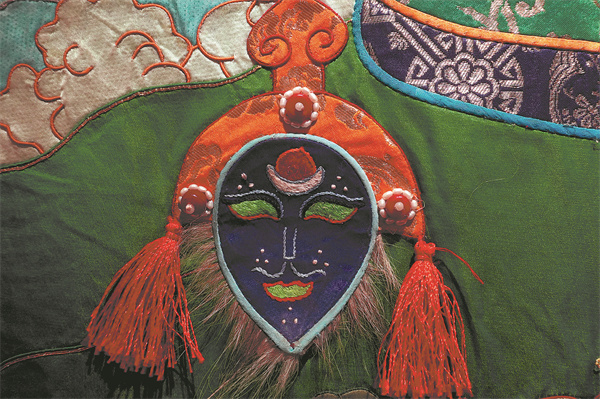
An embroidered Tibetan opera mask created by her team. CHINA DAILY
Meanwhile, the center continues to train young apprentices. Among them is 20-year-old Ngakwang Chophel, who began learning at 14 and can now create independent thangka works.
"It's inspiring to watch them grow from beginners to skilled craftsmen. They don't just gain a skill — they gain a new direction in life," Pasang Dekyi says.
For her, the most rewarding part is seeing the inheritors stand on their own feet.
"This is the true meaning of our work — passing on the craft and helping people build stable lives," she says.
Through the combined efforts of practitioners like Norbu, Pasang Dekyi, and many others, Xizang embroidery thangka was inscribed on the national intangible cultural heritage list in 2021.
Pasang Dekyi remains committed to her mission, ensuring that this ancient art continues to evolve while staying rooted in its original spirit.