In pics: Tibet's transportation network
In pics: Tibet's transportation network
In pics: Tibet's transportation network
In pics: Tibet's transportation network
In pics: Tibet's transportation network
In pics: Tibet's transportation network
In pics: Tibet's transportation network
In pics: Tibet's transportation network
In pics: Tibet's transportation network

In pics: Tibet's transportation network

In pics: Tibet's transportation network

In pics: Tibet's transportation network

In pics: Tibet's transportation network

In pics: Tibet's transportation network

In pics: Tibet's transportation network

In pics: Tibet's transportation network

In pics: Tibet's transportation network

In pics: Tibet's transportation network

In pics: Tibet's transportation network
In pics: Tibet's transportation network
In pics: Tibet's transportation network

In pics: Tibet's transportation network

In pics: Tibet's transportation network

In pics: Tibet's transportation network

In pics: Tibet's transportation network

In pics: Tibet's transportation network

In pics: Tibet's transportation network




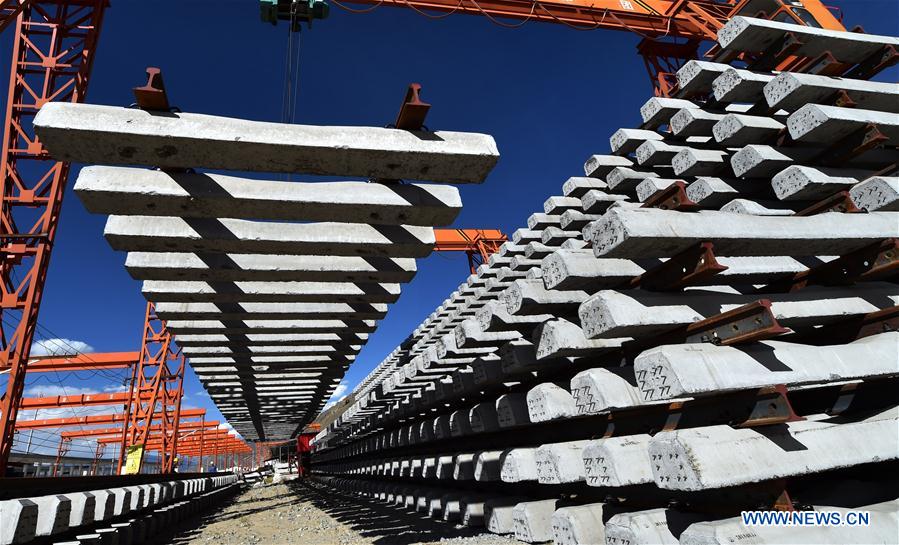
Photo taken on Sept. 19, 2018 shows a track laying base in Qushui County, southwest China's Tibet Autonomous Region. According to the white paper "Democratic Reform in Tibet -- Sixty Years On" issued in March of 2019, by the end of 2018, Tibet had 97,800 km of highway, 660 km of which were high-grade highways. All counties in Tibet had access to highways, and of the 697 townships and towns, 579 had direct access to highway transport and 696 could be reached by highways. Of the 5,467 villages in Tibet, 2,624 had direct access to highway transport and 5,457 could be reached by highway. In 2006, the Golmud-Lhasa section of the Qinghai-Tibet Railway was completed and opened to traffic, which was the first railway in Tibet. In 2014, the construction of Lhasa-Shigatse Railway was completed and tracklaying started on the Lhasa-Nyingchi Railway. (Xinhua/Chogo)
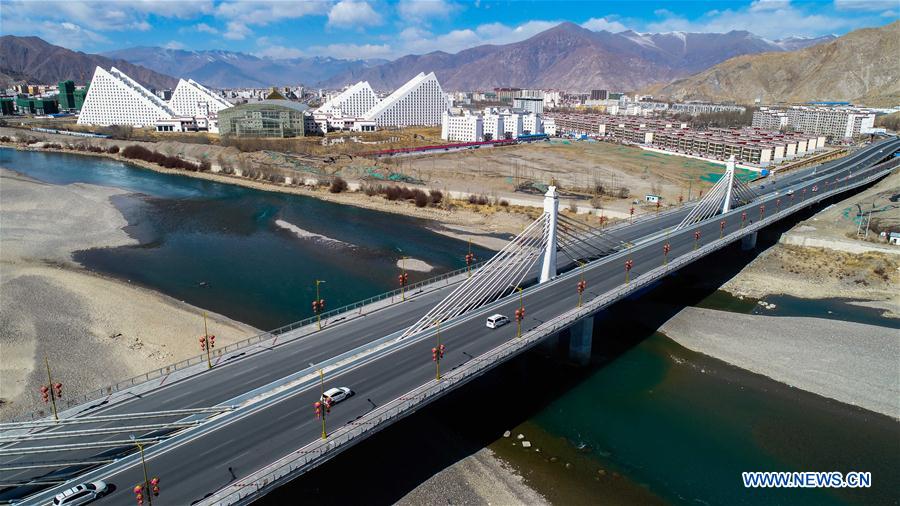
Aerail photo taken on March 4, 2018 shows of a newly-built bridge across the Lhasa River, a tributary of the Yarlung Zangbo River, in southwest China's Tibet Autonomous Region. According to the white paper "Democratic Reform in Tibet -- Sixty Years On" issued in March of 2019, by the end of 2018, Tibet had 97,800 km of highway, 660 km of which were high-grade highways. All counties in Tibet had access to highways, and of the 697 townships and towns, 579 had direct access to highway transport and 696 could be reached by highways. Of the 5,467 villages in Tibet, 2,624 had direct access to highway transport and 5,457 could be reached by highway. In 2006, the Golmud-Lhasa section of the Qinghai-Tibet Railway was completed and opened to traffic, which was the first railway in Tibet. In 2014, the construction of Lhasa-Shigatse Railway was completed and tracklaying started on the Lhasa-Nyingchi Railway. (Xinhua/Jigme Dorje)
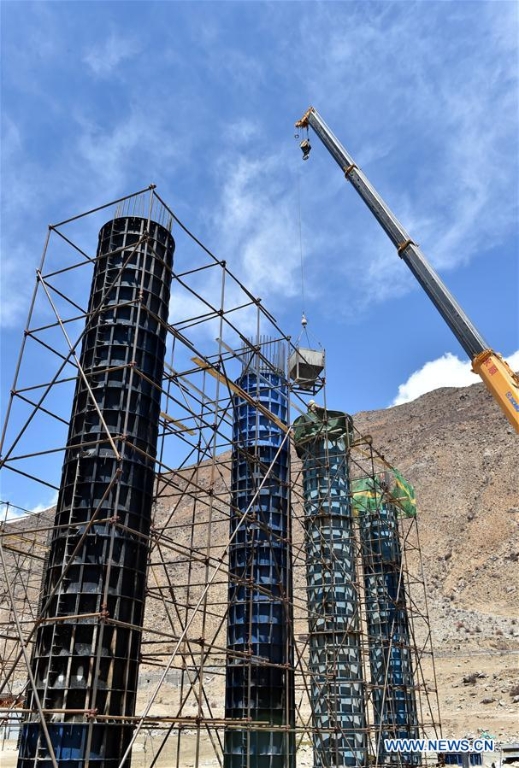
Photo taken on April 18, 2018 shows the construction site of a high-grade highway connecting Nagqu and Lhasa in southwest China's Tibet Autonomous Region. According to the white paper "Democratic Reform in Tibet -- Sixty Years On" issued in March of 2019, by the end of 2018, Tibet had 97,800 km of highway, 660 km of which were high-grade highways. All counties in Tibet had access to highways, and of the 697 townships and towns, 579 had direct access to highway transport and 696 could be reached by highways. Of the 5,467 villages in Tibet, 2,624 had direct access to highway transport and 5,457 could be reached by highway. In 2006, the Golmud-Lhasa section of the Qinghai-Tibet Railway was completed and opened to traffic, which was the first railway in Tibet. In 2014, the construction of Lhasa-Shigatse Railway was completed and tracklaying started on the Lhasa-Nyingchi Railway. (Xinhua/Chogo)
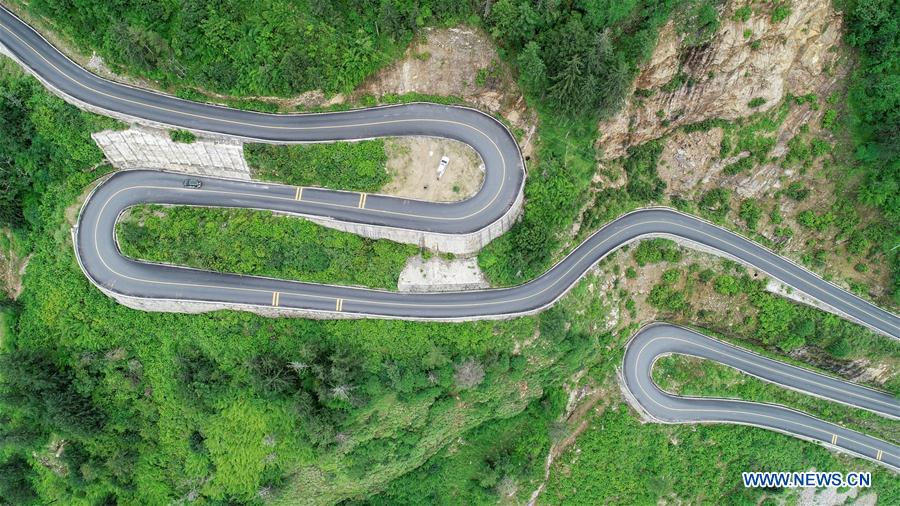
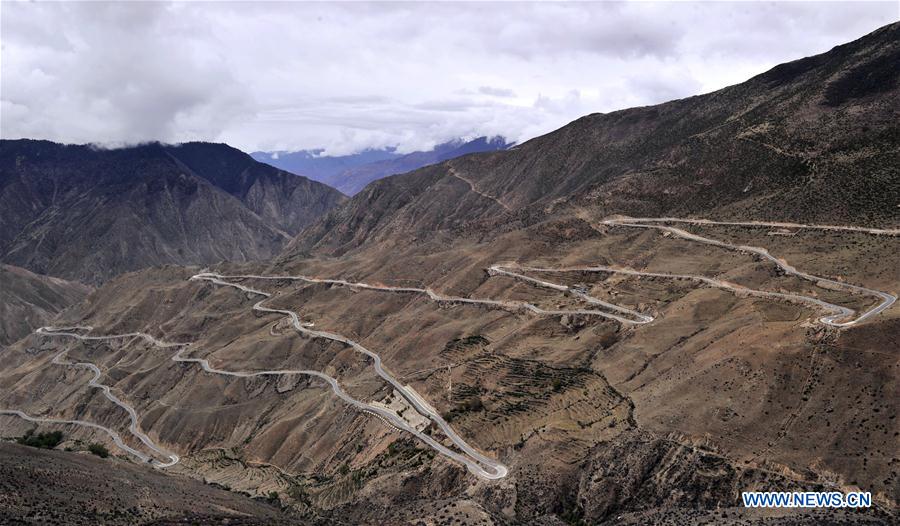
Aerial photo taken on Aug. 12, 2018 shows a winding mountain road in Gyirong County, southwest China's Tibet Autonomous Region. According to the white paper "Democratic Reform in Tibet -- Sixty Years On" issued in March of 2019, by the end of 2018, Tibet had 97,800 km of highway, 660 km of which were high-grade highways. All counties in Tibet had access to highways, and of the 697 townships and towns, 579 had direct access to highway transport and 696 could be reached by highways. Of the 5,467 villages in Tibet, 2,624 had direct access to highway transport and 5,457 could be reached by highway. In 2006, the Golmud-Lhasa section of the Qinghai-Tibet Railway was completed and opened to traffic, which was the first railway in Tibet. In 2014, the construction of Lhasa-Shigatse Railway was completed and tracklaying started on the Lhasa-Nyingchi Railway. (Xinhua/Liu Dongjun)
Aerial photo taken on April 1, 2016 shows a highway in Bomi County, southwest China's Tibet Autonomous Region. According to the white paper "Democratic Reform in Tibet -- Sixty Years On" issued in March of 2019, by the end of 2018, Tibet had 97,800 km of highway, 660 km of which were high-grade highways. All counties in Tibet had access to highways, and of the 697 townships and towns, 579 had direct access to highway transport and 696 could be reached by highways. Of the 5,467 villages in Tibet, 2,624 had direct access to highway transport and 5,457 could be reached by highway. In 2006, the Golmud-Lhasa section of the Qinghai-Tibet Railway was completed and opened to traffic, which was the first railway in Tibet. In 2014, the construction of Lhasa-Shigatse Railway was completed and tracklaying started on the Lhasa-Nyingchi Railway. (Xinhua/Purbu Zhaxi)
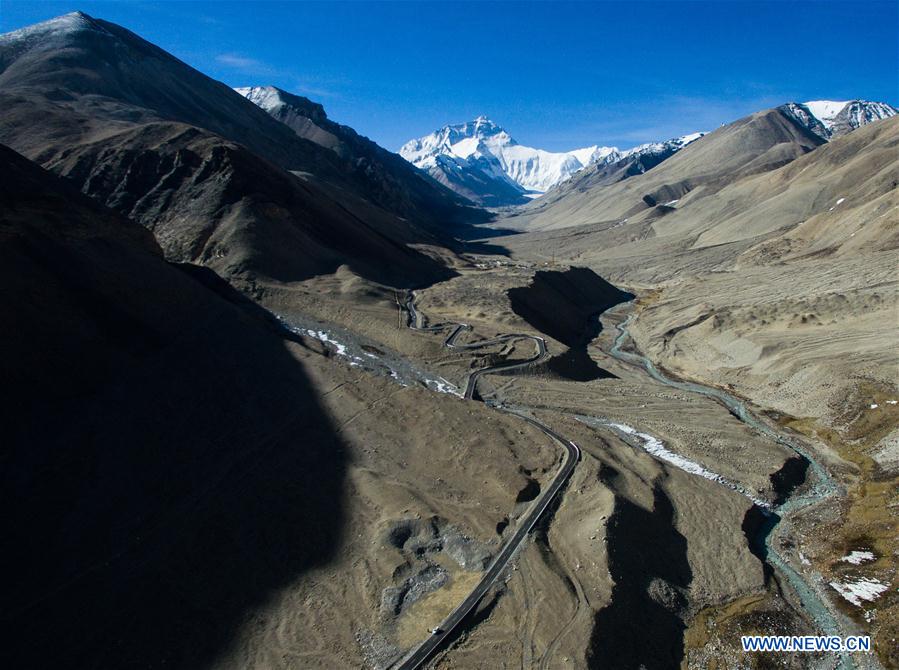
Aerial photo taken on May 18, 2017 shows a road leading to Mount Qomolangma in southwest China's Tibet Autonomous Region. According to the white paper "Democratic Reform in Tibet -- Sixty Years On" issued in March of 2019, by the end of 2018, Tibet had 97,800 km of highway, 660 km of which were high-grade highways. All counties in Tibet had access to highways, and of the 697 townships and towns, 579 had direct access to highway transport and 696 could be reached by highways. Of the 5,467 villages in Tibet, 2,624 had direct access to highway transport and 5,457 could be reached by highway. In 2006, the Golmud-Lhasa section of the Qinghai-Tibet Railway was completed and opened to traffic, which was the first railway in Tibet. In 2014, the construction of Lhasa-Shigatse Railway was completed and tracklaying started on the Lhasa-Nyingchi Railway. (Xinhua/Purbu Zhaxi)
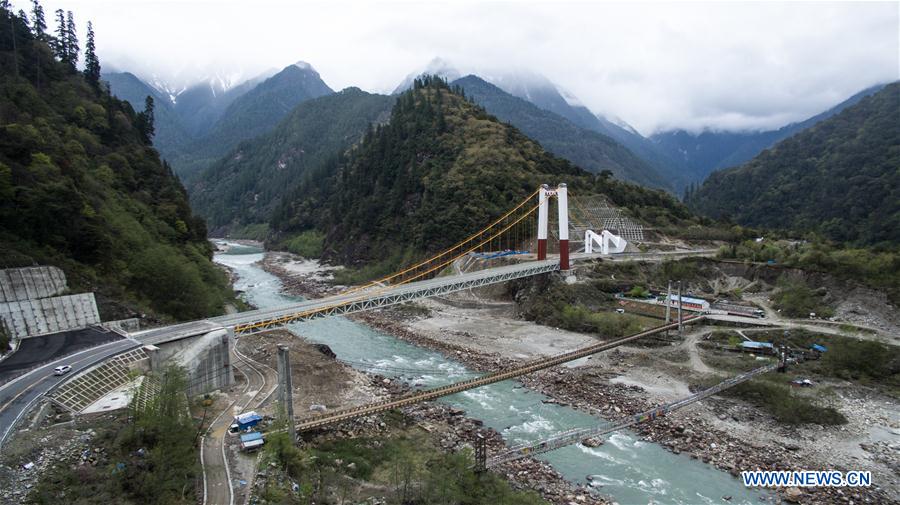
Aerial photo taken on March 29, 2016 shows the Yigong bridges built in three different periods in Nyingchi City, southwest China's Tibet Autonomous Region. According to the white paper "Democratic Reform in Tibet -- Sixty Years On" issued in March of 2019, by the end of 2018, Tibet had 97,800 km of highway, 660 km of which were high-grade highways. All counties in Tibet had access to highways, and of the 697 townships and towns, 579 had direct access to highway transport and 696 could be reached by highways. Of the 5,467 villages in Tibet, 2,624 had direct access to highway transport and 5,457 could be reached by highway. In 2006, the Golmud-Lhasa section of the Qinghai-Tibet Railway was completed and opened to traffic, which was the first railway in Tibet. In 2014, the construction of Lhasa-Shigatse Railway was completed and tracklaying started on the Lhasa-Nyingchi Railway. (Xinhua/Purbu Zhaxi)
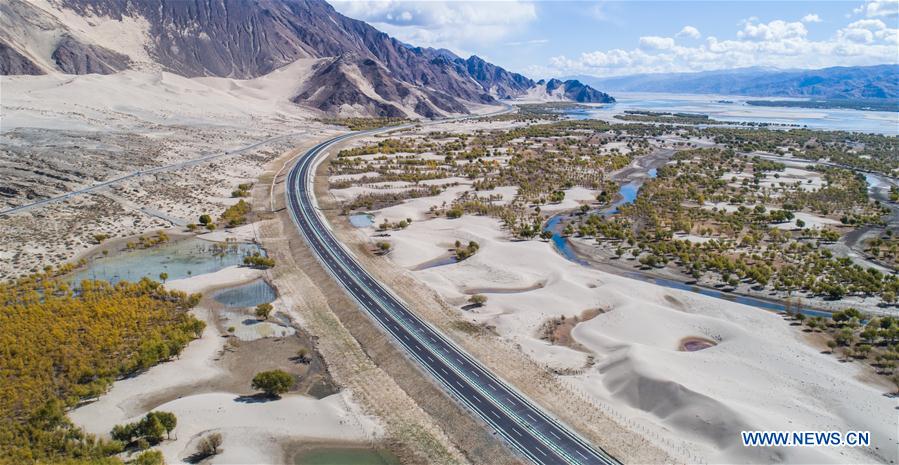
Aerail photo taken on Nov. 10, 2017 shows a high-grade highway linking the Gonggar airport in Lhasa to Tsetang township in southwest China's Tibet Autonomous Region. According to the white paper "Democratic Reform in Tibet -- Sixty Years On" issued in March of 2019, by the end of 2018, Tibet had 97,800 km of highway, 660 km of which were high-grade highways. All counties in Tibet had access to highways, and of the 697 townships and towns, 579 had direct access to highway transport and 696 could be reached by highways. Of the 5,467 villages in Tibet, 2,624 had direct access to highway transport and 5,457 could be reached by highway. In 2006, the Golmud-Lhasa section of the Qinghai-Tibet Railway was completed and opened to traffic, which was the first railway in Tibet. In 2014, the construction of Lhasa-Shigatse Railway was completed and tracklaying started on the Lhasa-Nyingchi Railway. (Xinhua/Purbu Zhaxi)
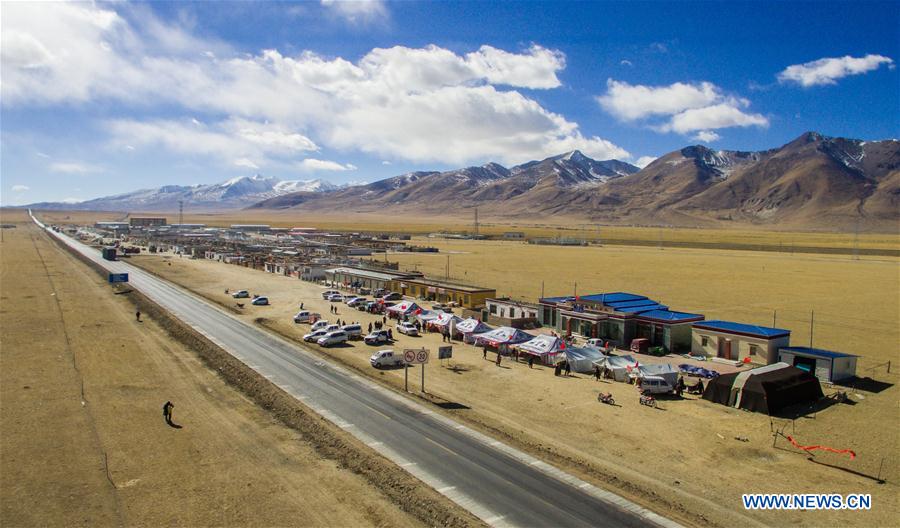
Aerial photo taken on Nov. 25, 2017 shows a livestock products fair by the side of Qinghai-Tibet highway in Nagqu of southwest China's Tibet Autonomous Region. According to the white paper "Democratic Reform in Tibet -- Sixty Years On" issued in March of 2019, by the end of 2018, Tibet had 97,800 km of highway, 660 km of which were high-grade highways. All counties in Tibet had access to highways, and of the 697 townships and towns, 579 had direct access to highway transport and 696 could be reached by highways. Of the 5,467 villages in Tibet, 2,624 had direct access to highway transport and 5,457 could be reached by highway. In 2006, the Golmud-Lhasa section of the Qinghai-Tibet Railway was completed and opened to traffic, which was the first railway in Tibet. In 2014, the construction of Lhasa-Shigatse Railway was completed and tracklaying started on the Lhasa-Nyingchi Railway. (Xinhua/Liu Dongjun)
Photo taken on April 27, 2018 shows a high-grade highway connecting Nyingchi City and Mainling Airport in southwest China's Tibet Autonomous Region. According to the white paper "Democratic Reform in Tibet -- Sixty Years On" issued in March of 2019, by the end of 2018, Tibet had 97,800 km of highway, 660 km of which were high-grade highways. All counties in Tibet had access to highways, and of the 697 townships and towns, 579 had direct access to highway transport and 696 could be reached by highways. Of the 5,467 villages in Tibet, 2,624 had direct access to highway transport and 5,457 could be reached by highway. In 2006, the Golmud-Lhasa section of the Qinghai-Tibet Railway was completed and opened to traffic, which was the first railway in Tibet. In 2014, the construction of Lhasa-Shigatse Railway was completed and tracklaying started on the Lhasa-Nyingchi Railway. (Xinhua/Zhang Rufeng)
Aerail photo taken on July 26, 2017 shows the construction site of the Golmud-Lhasa section of the Qinghai-Tibet railway in southwest China's Tibet Autonomous Region. According to the white paper "Democratic Reform in Tibet -- Sixty Years On" issued in March of 2019, by the end of 2018, Tibet had 97,800 km of highway, 660 km of which were high-grade highways. All counties in Tibet had access to highways, and of the 697 townships and towns, 579 had direct access to highway transport and 696 could be reached by highways. Of the 5,467 villages in Tibet, 2,624 had direct access to highway transport and 5,457 could be reached by highway. In 2006, the Golmud-Lhasa section of the Qinghai-Tibet Railway was completed and opened to traffic, which was the first railway in Tibet. In 2014, the construction of Lhasa-Shigatse Railway was completed and tracklaying started on the Lhasa-Nyingchi Railway. (Xinhua/Liu Dongjun)
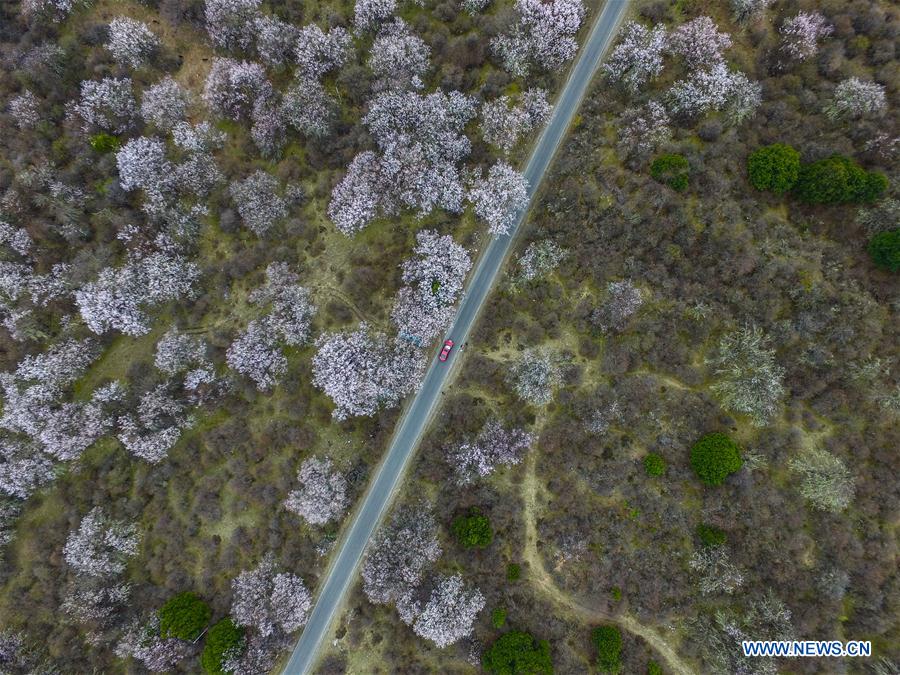
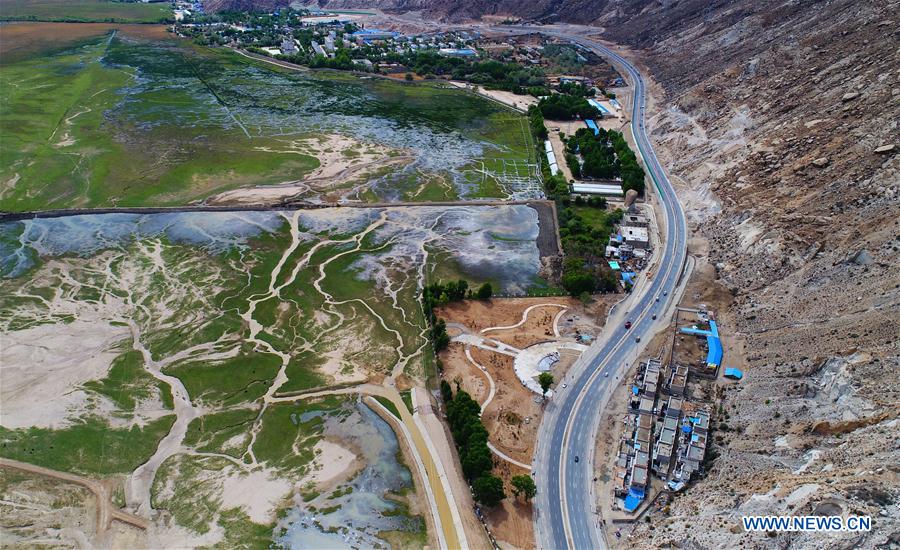
Aerial photo taken on April 3, 2019 shows a highway in Lhasa, southwest China's Tibet Autonomous Region. According to the white paper "Democratic Reform in Tibet -- Sixty Years On" issued in March of 2019, by the end of 2018, Tibet had 97,800 km of highway, 660 km of which were high-grade highways. All counties in Tibet had access to highways, and of the 697 townships and towns, 579 had direct access to highway transport and 696 could be reached by highways. Of the 5,467 villages in Tibet, 2,624 had direct access to highway transport and 5,457 could be reached by highway. In 2006, the Golmud-Lhasa section of the Qinghai-Tibet Railway was completed and opened to traffic, which was the first railway in Tibet. In 2014, the construction of Lhasa-Shigatse Railway was completed and tracklaying started on the Lhasa-Nyingchi Railway. (Xinhua/Purbu Zhaxi)
Aerial photo taken on May 18, 2017 shows a road leading to Mount Qomolangma in southwest China's Tibet Autonomous Region. According to the white paper "Democratic Reform in Tibet -- Sixty Years On" issued in March of 2019, by the end of 2018, Tibet had 97,800 km of highway, 660 km of which were high-grade highways. All counties in Tibet had access to highways, and of the 697 townships and towns, 579 had direct access to highway transport and 696 could be reached by highways. Of the 5,467 villages in Tibet, 2,624 had direct access to highway transport and 5,457 could be reached by highway. In 2006, the Golmud-Lhasa section of the Qinghai-Tibet Railway was completed and opened to traffic, which was the first railway in Tibet. In 2014, the construction of Lhasa-Shigatse Railway was completed and tracklaying started on the Lhasa-Nyingchi Railway. (Xinhua/Purbu Zhaxi)
Aerial photo taken on April 3, 2019 shows a highway in Lhasa, southwest China's Tibet Autonomous Region. According to the white paper "Democratic Reform in Tibet -- Sixty Years On" issued in March of 2019, by the end of 2018, Tibet had 97,800 km of highway, 660 km of which were high-grade highways. All counties in Tibet had access to highways, and of the 697 townships and towns, 579 had direct access to highway transport and 696 could be reached by highways. Of the 5,467 villages in Tibet, 2,624 had direct access to highway transport and 5,457 could be reached by highway. In 2006, the Golmud-Lhasa section of the Qinghai-Tibet Railway was completed and opened to traffic, which was the first railway in Tibet. In 2014, the construction of Lhasa-Shigatse Railway was completed and tracklaying started on the Lhasa-Nyingchi Railway. (Xinhua/Purbu Zhaxi)
Photo taken on Oct. 10, 2018 shows a high-grade highway under construction connecting Nagqu and Lhasa, southwest China's Tibet Autonomous Region. According to the white paper "Democratic Reform in Tibet -- Sixty Years On" issued in March of 2019, by the end of 2018, Tibet had 97,800 km of highway, 660 km of which were high-grade highways. All counties in Tibet had access to highways, and of the 697 townships and towns, 579 had direct access to highway transport and 696 could be reached by highways. Of the 5,467 villages in Tibet, 2,624 had direct access to highway transport and 5,457 could be reached by highway. In 2006, the Golmud-Lhasa section of the Qinghai-Tibet Railway was completed and opened to traffic, which was the first railway in Tibet. In 2014, the construction of Lhasa-Shigatse Railway was completed and tracklaying started on the Lhasa-Nyingchi Railway. (Xinhua/Chogo)
Photo taken on Oct. 18, 2015 shows a high-grade highway across the Yarlung Zangbo River, southwest China's Tibet Autonomous Region. According to the white paper "Democratic Reform in Tibet -- Sixty Years On" issued in March of 2019, by the end of 2018, Tibet had 97,800 km of highway, 660 km of which were high-grade highways. All counties in Tibet had access to highways, and of the 697 townships and towns, 579 had direct access to highway transport and 696 could be reached by highways. Of the 5,467 villages in Tibet, 2,624 had direct access to highway transport and 5,457 could be reached by highway. In 2006, the Golmud-Lhasa section of the Qinghai-Tibet Railway was completed and opened to traffic, which was the first railway in Tibet. In 2014, the construction of Lhasa-Shigatse Railway was completed and tracklaying started on the Lhasa-Nyingchi Railway. (Xinhua/Purbu Zhaxi)
Aerial photo taken on April 3, 2019 shows an overpass in the western suburb of Lhasa, southwest China's Tibet Autonomous Region. According to the white paper "Democratic Reform in Tibet -- Sixty Years On" issued in March of 2019, by the end of 2018, Tibet had 97,800 km of highway, 660 km of which were high-grade highways. All counties in Tibet had access to highways, and of the 697 townships and towns, 579 had direct access to highway transport and 696 could be reached by highways. Of the 5,467 villages in Tibet, 2,624 had direct access to highway transport and 5,457 could be reached by highway. In 2006, the Golmud-Lhasa section of the Qinghai-Tibet Railway was completed and opened to traffic, which was the first railway in Tibet. In 2014, the construction of Lhasa-Shigatse Railway was completed and tracklaying started on the Lhasa-Nyingchi Railway. (Xinhua/Jigme Dorje)
Aerial photo taken on April 3, 2019 shows the Najin Bridge in Lhasa, southwest China's Tibet Autonomous Region. According to the white paper "Democratic Reform in Tibet -- Sixty Years On" issued in March of 2019, by the end of 2018, Tibet had 97,800 km of highway, 660 km of which were high-grade highways. All counties in Tibet had access to highways, and of the 697 townships and towns, 579 had direct access to highway transport and 696 could be reached by highways. Of the 5,467 villages in Tibet, 2,624 had direct access to highway transport and 5,457 could be reached by highway. In 2006, the Golmud-Lhasa section of the Qinghai-Tibet Railway was completed and opened to traffic, which was the first railway in Tibet. In 2014, the construction of Lhasa-Shigatse Railway was completed and tracklaying started on the Lhasa-Nyingchi Railway. (Xinhua/Jigme Dorje)
Aerial photo taken on May 11, 2017 shows a round-the-city highway in Lhasa, southwest China's Tibet Autonomous Region. According to the white paper "Democratic Reform in Tibet -- Sixty Years On" issued in March of 2019, by the end of 2018, Tibet had 97,800 km of highway, 660 km of which were high-grade highways. All counties in Tibet had access to highways, and of the 697 townships and towns, 579 had direct access to highway transport and 696 could be reached by highways. Of the 5,467 villages in Tibet, 2,624 had direct access to highway transport and 5,457 could be reached by highway. In 2006, the Golmud-Lhasa section of the Qinghai-Tibet Railway was completed and opened to traffic, which was the first railway in Tibet. In 2014, the construction of Lhasa-Shigatse Railway was completed and tracklaying started on the Lhasa-Nyingchi Railway. (Xinhua/Purbu Zhaxi)
Photo taken on May 15, 2016 shows a zigzag asphalt road in Changdu City, southwest China's Tibet Autonomous Region. According to the white paper "Democratic Reform in Tibet -- Sixty Years On" issued in March of 2019, by the end of 2018, Tibet had 97,800 km of highway, 660 km of which were high-grade highways. All counties in Tibet had access to highways, and of the 697 townships and towns, 579 had direct access to highway transport and 696 could be reached by highways. Of the 5,467 villages in Tibet, 2,624 had direct access to highway transport and 5,457 could be reached by highway. In 2006, the Golmud-Lhasa section of the Qinghai-Tibet Railway was completed and opened to traffic, which was the first railway in Tibet. In 2014, the construction of Lhasa-Shigatse Railway was completed and tracklaying started on the Lhasa-Nyingchi Railway. (Xinhua/Jigme Dorje)
Aerial photo taken on Oct. 17, 2018 shows a high-grade highway connecting Zedang and Gongkar in southwest China's Tibet Autonomous Region. According to the white paper "Democratic Reform in Tibet -- Sixty Years On" issued in March of 2019, by the end of 2018, Tibet had 97,800 km of highway, 660 km of which were high-grade highways. All counties in Tibet had access to highways, and of the 697 townships and towns, 579 had direct access to highway transport and 696 could be reached by highways. Of the 5,467 villages in Tibet, 2,624 had direct access to highway transport and 5,457 could be reached by highway. In 2006, the Golmud-Lhasa section of the Qinghai-Tibet Railway was completed and opened to traffic, which was the first railway in Tibet. In 2014, the construction of Lhasa-Shigatse Railway was completed and tracklaying started on the Lhasa-Nyingchi Railway. (Xinhua/Purbu Zhaxi)
Aerial photo taken on Jan. 11, 2019 shows a newly-built round-the-city highway in Lhasa, southwest China's Tibet Autonomous Region. According to the white paper "Democratic Reform in Tibet -- Sixty Years On" issued in March of 2019, by the end of 2018, Tibet had 97,800 km of highway, 660 km of which were high-grade highways. All counties in Tibet had access to highways, and of the 697 townships and towns, 579 had direct access to highway transport and 696 could be reached by highways. Of the 5,467 villages in Tibet, 2,624 had direct access to highway transport and 5,457 could be reached by highway. In 2006, the Golmud-Lhasa section of the Qinghai-Tibet Railway was completed and opened to traffic, which was the first railway in Tibet. In 2014, the construction of Lhasa-Shigatse Railway was completed and tracklaying started on the Lhasa-Nyingchi Railway. (Xinhua/Purbu Zhaxi)
Photo taken on April 3, 2019 shows a highway in Lhasa, southwest China's Tibet Autonomous Region. According to the white paper "Democratic Reform in Tibet -- Sixty Years On" issued in March of 2019, by the end of 2018, Tibet had 97,800 km of highway, 660 km of which were high-grade highways. All counties in Tibet had access to highways, and of the 697 townships and towns, 579 had direct access to highway transport and 696 could be reached by highways. Of the 5,467 villages in Tibet, 2,624 had direct access to highway transport and 5,457 could be reached by highway. In 2006, the Golmud-Lhasa section of the Qinghai-Tibet Railway was completed and opened to traffic, which was the first railway in Tibet. In 2014, the construction of Lhasa-Shigatse Railway was completed and tracklaying started on the Lhasa-Nyingchi Railway. (Xinhua/Purbu Zhaxi)
Photo taken on Jan. 30, 2019 shows a road leading to Shuanghu County, southwest China's Tibet Autonomous Region. According to the white paper "Democratic Reform in Tibet -- Sixty Years On" issued in March of 2019, by the end of 2018, Tibet had 97,800 km of highway, 660 km of which were high-grade highways. All counties in Tibet had access to highways, and of the 697 townships and towns, 579 had direct access to highway transport and 696 could be reached by highways. Of the 5,467 villages in Tibet, 2,624 had direct access to highway transport and 5,457 could be reached by highway. In 2006, the Golmud-Lhasa section of the Qinghai-Tibet Railway was completed and opened to traffic, which was the first railway in Tibet. In 2014, the construction of Lhasa-Shigatse Railway was completed and tracklaying started on the Lhasa-Nyingchi Railway. (Xinhua/Purbu Zhaxi)
Photo taken on Jan. 30, 2019 shows a road leading to Shuanghu County, southwest China's Tibet Autonomous Region. According to the white paper "Democratic Reform in Tibet -- Sixty Years On" issued in March of 2019, by the end of 2018, Tibet had 97,800 km of highway, 660 km of which were high-grade highways. All counties in Tibet had access to highways, and of the 697 townships and towns, 579 had direct access to highway transport and 696 could be reached by highways. Of the 5,467 villages in Tibet, 2,624 had direct access to highway transport and 5,457 could be reached by highway. In 2006, the Golmud-Lhasa section of the Qinghai-Tibet Railway was completed and opened to traffic, which was the first railway in Tibet. In 2014, the construction of Lhasa-Shigatse Railway was completed and tracklaying started on the Lhasa-Nyingchi Railway. (Xinhua/Purbu Zhaxi)
An asphalt road is seen in Mainling County under Nyingchi City, southwest China's Tibet Autonomous Region, Nov. 21, 2018. According to the white paper "Democratic Reform in Tibet -- Sixty Years On" issued in March of 2019, by the end of 2018, Tibet had 97,800 km of highway, 660 km of which were high-grade highways. All counties in Tibet had access to highways, and of the 697 townships and towns, 579 had direct access to highway transport and 696 could be reached by highways. Of the 5,467 villages in Tibet, 2,624 had direct access to highway transport and 5,457 could be reached by highway. In 2006, the Golmud-Lhasa section of the Qinghai-Tibet Railway was completed and opened to traffic, which was the first railway in Tibet. In 2014, the construction of Lhasa-Shigatse Railway was completed and tracklaying started on the Lhasa-Nyingchi Railway. (Xinhua/Dainzin Nyima Choktrul)
Aerial photo taken on June 17, 2016 shows a train running on the Lhasa-Shigatse Railway in southwest China's Tibet Autonomous Region. According to the white paper "Democratic Reform in Tibet -- Sixty Years On" issued in March of 2019, by the end of 2018, Tibet had 97,800 km of highway, 660 km of which were high-grade highways. All counties in Tibet had access to highways, and of the 697 townships and towns, 579 had direct access to highway transport and 696 could be reached by highways. Of the 5,467 villages in Tibet, 2,624 had direct access to highway transport and 5,457 could be reached by highway. In 2006, the Golmud-Lhasa section of the Qinghai-Tibet Railway was completed and opened to traffic, which was the first railway in Tibet. In 2014, the construction of Lhasa-Shigatse Railway was completed and tracklaying started on the Lhasa-Nyingchi Railway. (Xinhua/Liu Dongjun)