
In the ensuing period of the Tubo, the Three-Tsenpo Period, during the reign of Gungsong Gungtsen, Mangsong Mangtsen and Dusong Mangpqje, Buddhism did not spread further. On the contrary, the existing ties between Buddhism and the Tubo imperial court became looser.
In the period of Tride Tsugtsen, the Tubo court once again became interested in Buddhism. From the reign of Songtsen Gampo to that of Tride Tsugtsen, the Bon religion had been prevailing throughout Tubo while Buddhism only spread or extended from time to time. During the reign of Tride Tsugtsen, “Zengar Mole Gasag and Nyizha Nagnma were sent to India for Dharma. They went to invite Master Pundit Formi and Forgyi when they heard on the way that the two masters were cultivating in the Gangdise Mountains. They were rejected by both, but asked questions on Exoteric Buddhism’s Agama Sutra, Suvarnaprab Hasattama Sutra, Kriya TantraJ Chatya Tantra which were sorted and presented to the King. To enshrine the sutras, the king built five temples, namely, Kazha Temple in Lhasa, Zensang Temple in Zhama, Qenpo Temple in Nanre, Geru Temple in Zhama and Masagung Temple.” Tride Tsugtsen was another Tsenpo with a positive attitude towards Buddhism after Songtsen Gampo. It seemed likely that the support of Tride Trugtsen for Buddhism came from the princess of the Tang Dynasty. In 710, Tride Tsugtsen married Princess Jincheng of the Tang Dynasty. The arrival of Princess Jincheng reignited the interest in Buddhism in Tubo. First, she moved the statue of Sakyamuni, which was brought to Tubo by Princess Wencheng and had been buried underground for several dynasties, to the Jokhang Monastery, and arranged for monks from the Han area to manage the rituals and routines in the monastery. Second, Princess Jincheng assisted the Tsenpo in creating the conditions for exiled and persecuted monks and protected their religious belief at that time, “Princess Jincheng from the Han area, as a benefactor, invited monks suffering from persecution in Khotan, Anxi, Sulo, Gilgit and Kashmir to Tubo, and fended them for three to four years in temples.” Thanks to Princess Jincheng's active participation and promotion of Buddhism in Tubo, such as “(she) built several temples including the Geru Temple in Zhama to invite monks expelled by states in the Western Regions as well as monks from the Han area to Tubo for Dharma promotion and cultivation", Tubo, a country without local monks or nuns, accepted or housed a number of foreign monks, which wasn’t an easy issue indeed.
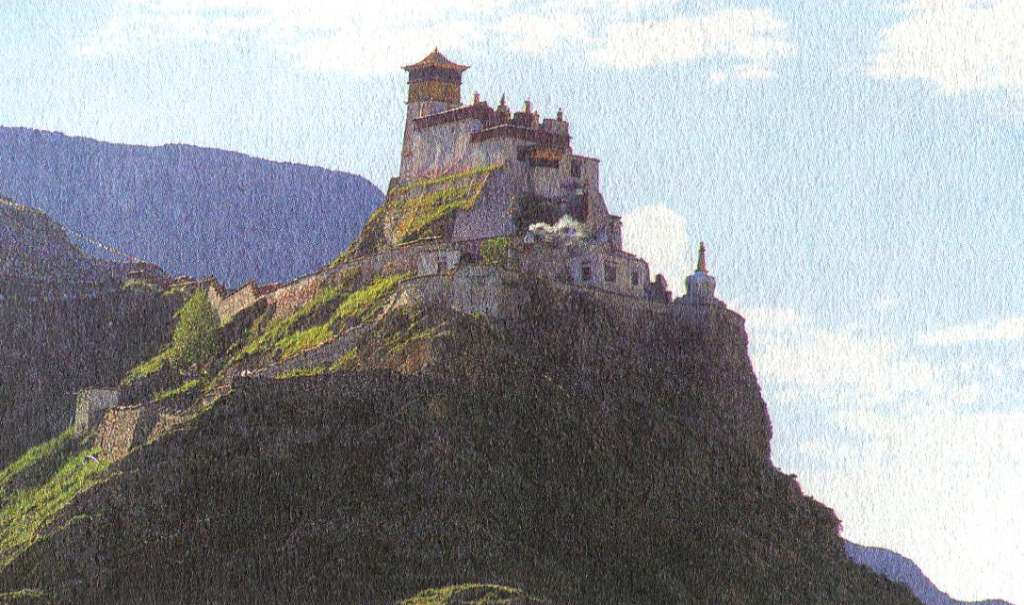
Yumbulagang Palace in Shannan prefecture, Tibet
As expected, however, when the young King Trisong Detsen came to the throne after the death of Tride Tsugtsen, foreign monks were expelled from Tubo. “Minister Marshang, holding power in his hands, had no interest in Dhama, and thus drove all monks out of Tubo.” The new King Trisong Detsen, despite wanting to support Buddhism, had no power and failed to keep foreign monks in Tubo. And “the monks, nuns, sarira, sutra and ritual instruments were all taken away.” As a result, Buddhism was greatly suppressed in Tubo. Nevertheless, the influence of Buddhism in Tubo was deepened due to the access of monks from Western Regions and the Han area to Tubo and due to their lifestyle and ritual activities in the region.

The Tomb of the Tubo kings in Qonggyai county, Shannan prefecture, Tibet
Buddhism underwent a complicated and hard process during its spread to Tubo. Apart from the arrival of some sutras and Buddhist instruments in the fourth century, Buddhism was officially introduced in the 7th century during the reign of King Songtsen Gampo and disseminated for a century until the 8th century during the reign of KingTride Tsugtsen. During the 100-year period, Buddhism spread from time to time, but failed to take root in Tubo when the Bon religion was dominant in the area.