
Tibetan kiang (Equus kiang)
Tibetan kiangs are included in the country’s level one protection list, with yellowish brown fur, white at the belly and interior limbs, black strips across the back. The four limbs are long and white, as if wearing long white stockings. The kiang is all excellent long-distance race following the leader, the massive flock run like a well-trained team at a speed compatible with the land cruiser. While driving along the Nagqu-Ngari Highway in northern Tibet, you'll often have the companion of kiangs who seem to be enjoying the race very much. Kiangs are group animals, normally one herd consists of 8 to 20 members. Large groups are said to contain over 100 members.
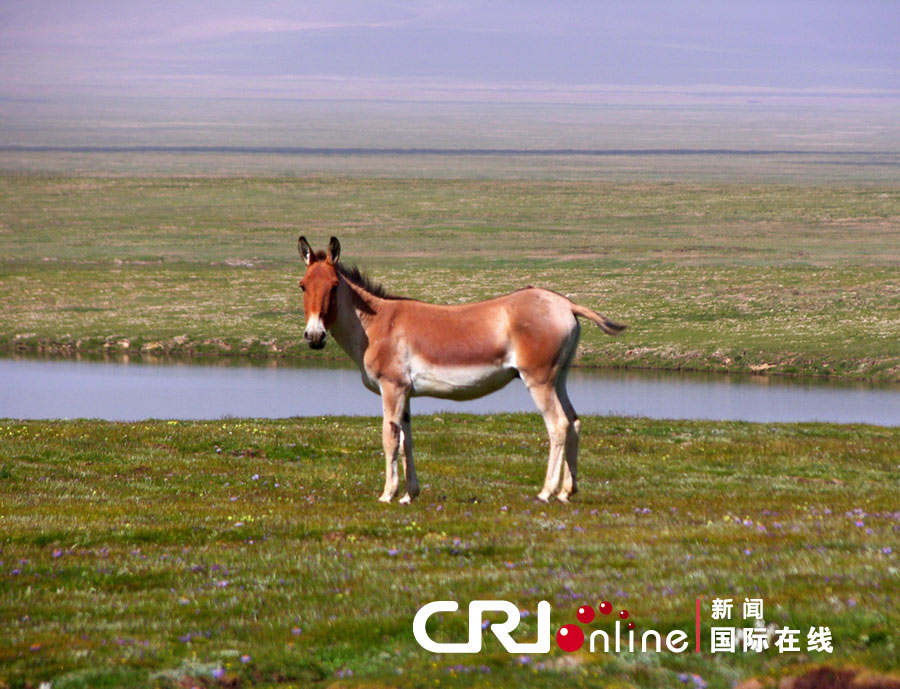
Tibetan kiang. (Source: CRI)
Wild yak (Bos grunniens)
Wild yaks, the grandest animals in Tibet, are included in the country's level one protection list. The giant animal is very powerful, with grown-ups exceeding 3 metres in length. The curving horns of the yak are also gorgeous. Tibetan documents say that hunters in the northern regions once killed a gigantic yak. Two people could sit side by side between the pair of horns. If one sat on its head, he couldn’t touch either horn stretching the arms long. It took over 20 domestic yaks to carry this one wild yak. If a domestic yak normally carries 50 kilograms of cargo, this legendary yak must have been about 1,000 kilograms. Wild yaks are experts in climbing mountains, wading rivers and travelling on the snowy ground. The yak wears long and thick black fur which touches the ground and moves like a war robe. The fur of wild yak is 2.4 times that of the domestic yak. This enables the wild animal to live comfortably in the extreme cold at -40℃. The wild yak is gifted with three weapons: a tongue with numerous splinters, the horns and the hoofs. The horns are powerful arms when the yak plays, competes for mate and fights enemies. Wild yaks are also group animals. One flock may gather over 30 or even 300 yaks. Female yaks always follow the bigger groups to better protect their calves. The tough wild yaks often seek the chance to mate with domestic yaks. Tibetan herdsmen often look for their lost cattle from wild yak flocks, while wild yaks occasionally would also mix with domestic yaks herding on the alpine meadow. Wild yaks are hard to tame. The first-generation calf between the wild and domestic yaks is called “Zhongca” by the Tibetan herdsmen. The cross-bred calf is very strong and grows fast, but still retains a wild character.