
The complicated natural conditions of Tibet provide diversified habitats for animals. Among the rich animal resources, many are rare species on the world level. In Tibet, wildlife is an indispensible part of the landscape longed for by tourists.
Wildlife
Tibet hosts one of the earth’s last remaining well-preserved natural ecological systems. The vast, spacious and quiet land is an enormous wonderland of wildlife. Tibet has 125 species, or one-third of the nation’s rare animals protected by the government.
Thorold’s deer (Cervus albirostris)
Included in the country’s level one protection list, most wild Thorold’s deer dwell on the eastern mountainous region above 4,000 meters. Thorold’s deer usually live on the same slope with red deer, but the two seldom mix. In Qamdo, people have succeeded in taming and breeding this rare animal.
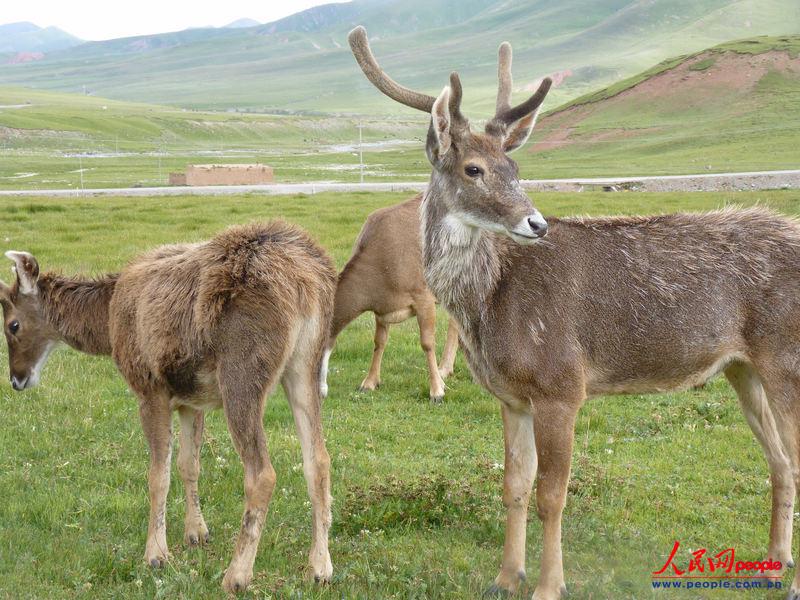
Thorold’s deer. (Source: people.com.cn)
Tibetan antelope (Pantholops hodgsonii)
Included in the country’s level one protection list, Tibetan antelopes are light brown fur, but white at the belly, front chest and inner side of limbs. Male antelopes have a pair of 60-70-centimeter long bamboo-like black antlers. Looking from the side, the pair of antlers appears exactly the same, gaining the antelope a nickname: Unicorn. The Tibetan antelope is a graceful animal. It likes to walk with the head low, but when it runs, the speed can exceed over 100 kilometers per hour, far ahead of the chasing wolf pack. The antelopes often dwell on the river or lake banks where the grasses flourish. Every year, when the mating season comes, the antelopes will migrate northward to the lake region, which is also home for migrating birds. In autumn, the mother antelopes will bring their offspring back south. A flock of antelope normally consists of around 100 members. But at the mating and breeding season, sometimes thousands will gather to form a moving forest of antlers. The most interesting aspect about the antelopes is their sense of rule: No matter running under what circumstances, grown-up antelopes always take the lead, younger members will follow behind. They appear to be running in a strict order and never change it. When taking a rest, the antelopes will dig a pit and lie down. As the male antelopes’ antlers stick above the pits, it appears as if some tree seedling have suddenly propped up. The antlers can be good medicine material. The fine wool of Tibetan antelope fetches prices higher than gold in the international textile market.
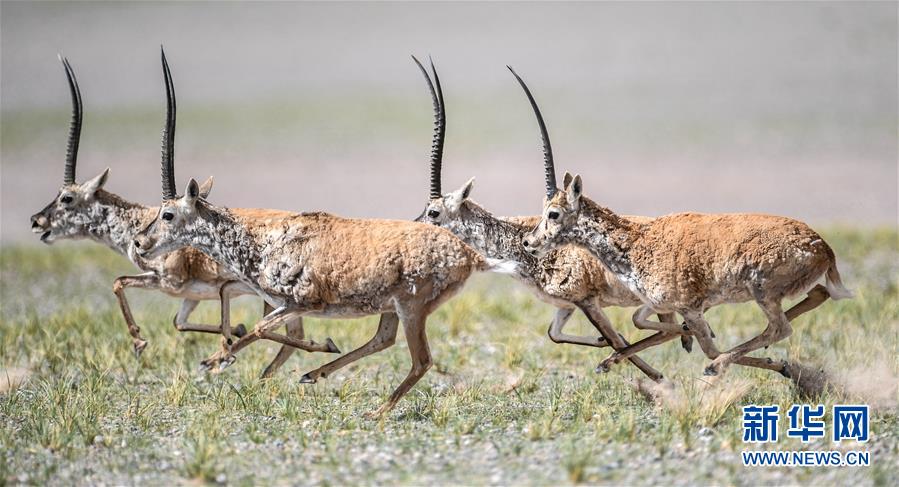
Tibetan Antelopes. (Source: Xinhua)